Real prints VS reproductions
What separates an original print from a reproduction — a giclée, an offset lithograph — and the one question of origin that tells them apart.
The first print I ever bought was a Jim Pollock linocut, from a Phish show in California in 2000 — the band’s last shows before their hiatus. An edition of 600, signed and numbered in pencil, and the last print he ever pulled on his old bookbinding press. The same image was on sale a few feet away as the official poster — offset-printed, the palette brighter and busier than the linocut’s two colours, no edition, no signature. I bought the linocut, and I knew exactly why: it was the limited edition, to my eye the better-made of the two, and a hand-pulled Pollock was already the more sought-after object. It’s a good-looking poster, and plenty of people happily took one home — I wanted the print.
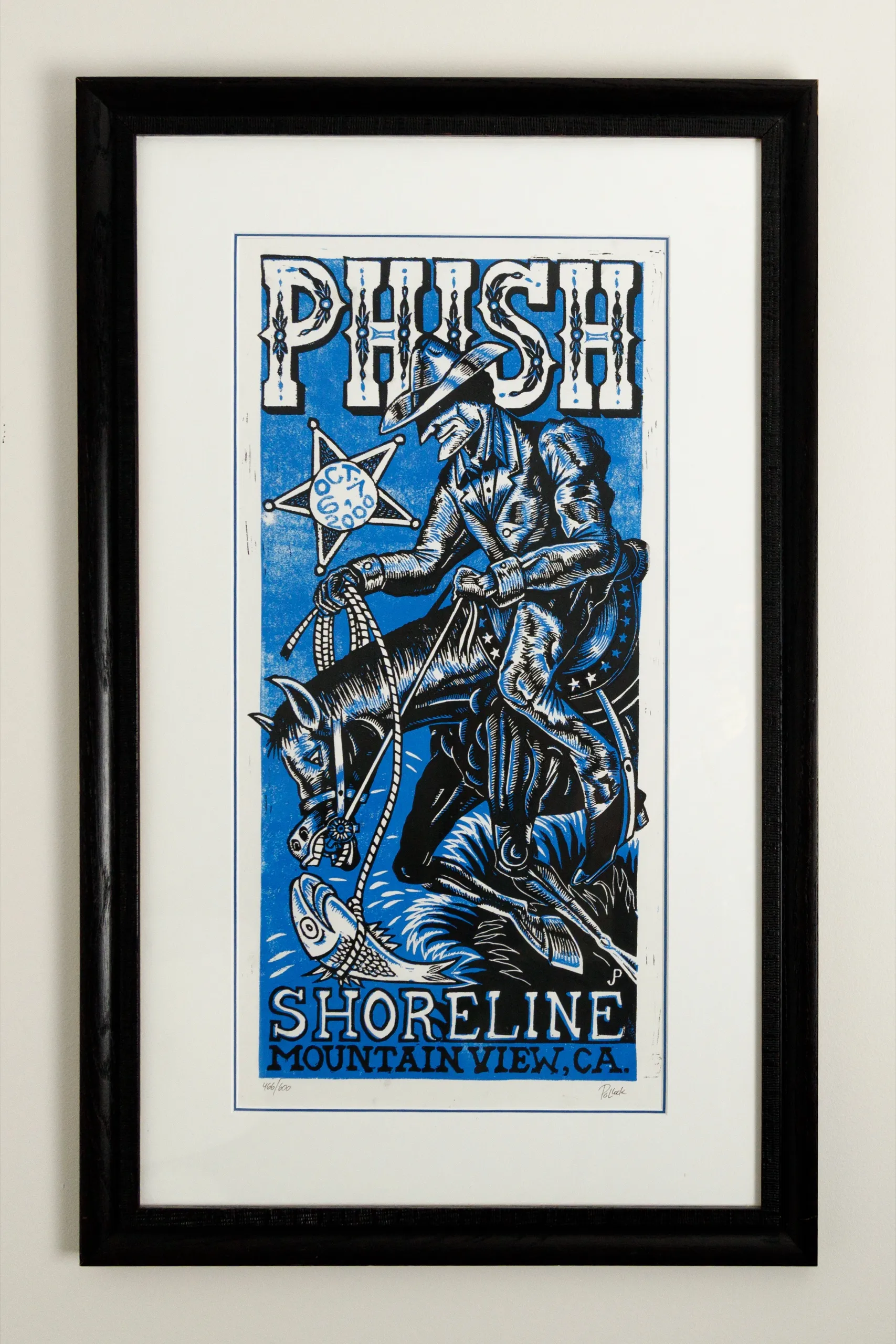
The gap between those two objects — the linocut, and the offset poster of the linocut — is the most useful distinction in print collecting, and the most reliably muddled. It sits under every honest question a newer collector asks: whether a giclée counts as a real print, what separates an offset lithograph from a “real” one, whether a signature or an edition number is enough to make something original. Our manifesto states the position without hedging: prints are not reproductions of a work in another medium — they are the work itself. What this essay does is make that line usable — to say plainly what separates an original print from a reproduction, and to give you a way to tell them apart that needs no loupe and no laboratory, only a question about how the thing in front of you came to exist.
So, before anything else, the distinction in one sentence: an original print is made from a matrix the artist participated in creating, while a reproduction is a copy of a work that already exists in another medium.
Start where the object starts. Every original print begins as a matrix — the surface the artist works so that it can be inked and pressed to paper. In a woodcut or linocut it is the block the artist carves; in an etching, the metal plate the artist draws into and bites in acid; in a lithograph, the stone or plate the artist draws on directly; in a screen print, the mesh screen the artist prepares with a stencil. The Museum of Modern Art, in its long-running primer on the medium, describes a print as a work made not by drawing straight onto paper but through an indirect transfer — an image laid down on a matrix and then carried to the sheet, an edition of impressions issuing from that one prepared surface.
That word — matrix — is the whole argument in miniature. Because the image is born on the matrix and transferred from it, there is no earlier, “real” version of the work that the print is merely a picture of. The decisions that make the image are made in the matrix itself: the gouge’s path through the lino, the way the acid bites a line, the grease of the crayon on the stone, the open and blocked areas of the screen. An impression is what happens when that matrix meets paper. This is what the manifesto means in calling a print the work itself rather than a reproduction of a work in another medium — the print is not standing in for a painting or drawing kept somewhere else. The matrix and the impressions pulled from it are the work; the edition only tells you how many of them there are.
“The artist participated in creating” carries its weight on purpose, because printmaking is often collaborative and that collaboration takes nothing away from originality. Few etchers run their own press, and many of the prints I care about most were pulled by master printers and workshops — a Martin Whatson woodblock made with the Adachi Institute’s artisans in Tokyo is no less Whatson’s for the fact that hands other than his carved the blocks and pulled the impressions. What makes it original is that the matrix derives from the artist’s own image and choices, prepared or realised under his direction and approved by him for the edition. The pencil signature in the margin is, among other things, that approval made visible. A reproduction has none of this behind it: no artist’s matrix, only a camera or scanner that has photographed a finished work and a machine that has copied the capture onto paper.
So the dividing line is not fidelity, and it is not even whether human hands touched every sheet. A reproduction can be printed beautifully on good rag paper and still be a reproduction; a woodblock pulled by a workshop is still an original print. The difference is one of origin — whether the object issued from a matrix the artist participated in making, or whether it is a copy, by whatever process, of a work that already exists elsewhere. Which is exactly what the next two cases turn on: the giclée, and the lithograph that isn’t one.
Take the first case. A giclée is an inkjet print — pigment sprayed onto paper by the same family of machines as the inkjet in an office, refined with archival inks, fine papers, and careful colour management. The word itself is instructive: it was coined in 1991, at the California studio Nash Editions, by the printmaker Jack Duganne, for fine-art prints made on an adapted IRIS inkjet machine — a word chosen specifically to avoid the connotations of “inkjet” or “computer-generated,” and taken from the French for the spray of a nozzle. So before it is anything else, a giclée is a high-quality inkjet print that was given a better name.
That is not an insult; it is a description. When a giclée reproduces a work that exists in another medium — a painting, a drawing, a photograph — it is exactly the object the last section described: a camera or scanner has captured a finished work, and the inkjet has laid that capture down on a sheet. There is no matrix the artist participated in making. And here is the part that so often gets missed: a pencil signature, an edition number, and a sheet of good cotton rag do not change what the object is. A giclée of a painting is a reproduction whether or not it is signed, numbered, or beautifully printed. Of the three, the number is the most persuasive and the least meaningful — “12/100” on a giclée does not describe a limited edition the way it does on a hand-pulled print, because the source is a digital file that can issue another hundred, or another thousand, with nothing carved away and no matrix retired. The signature is graphite on a reproduction. The number is a decision.
None of which makes a giclée a poor thing to own. Several of the pieces on my own walls are giclées, and a good one earns its place there — sharp, colour-true, archival, a pleasure to live with. They aren’t part of the Paper Matters collection — not because a giclée is a lesser object, but because the collection focuses on prints made from a matrix the artist participated in creating, and a giclée, however fine, isn’t one. The difficulty is only that a signature can make a reproduction look like the other kind of thing, so that a buyer who wanted an original print goes home with a very good copy of one.
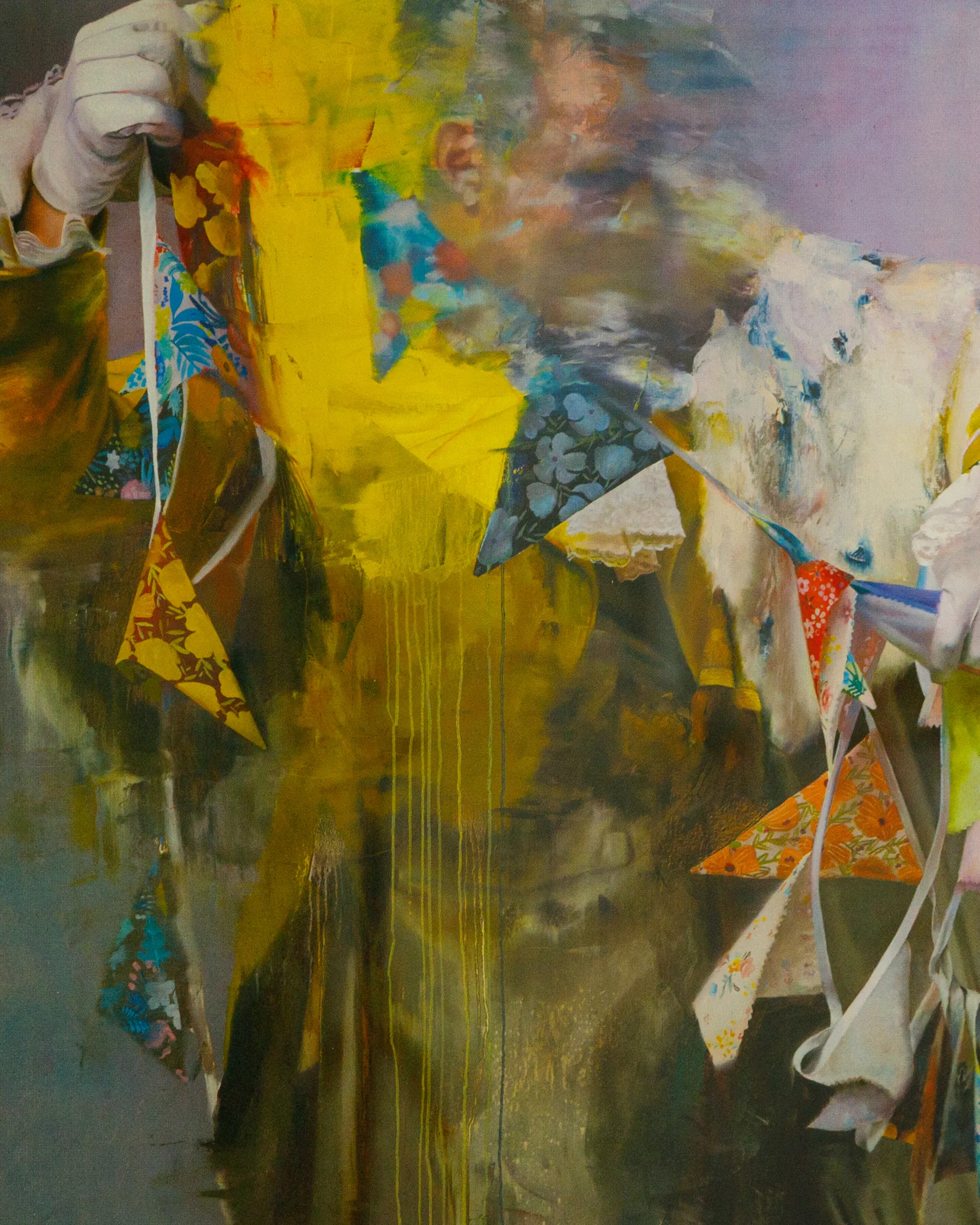
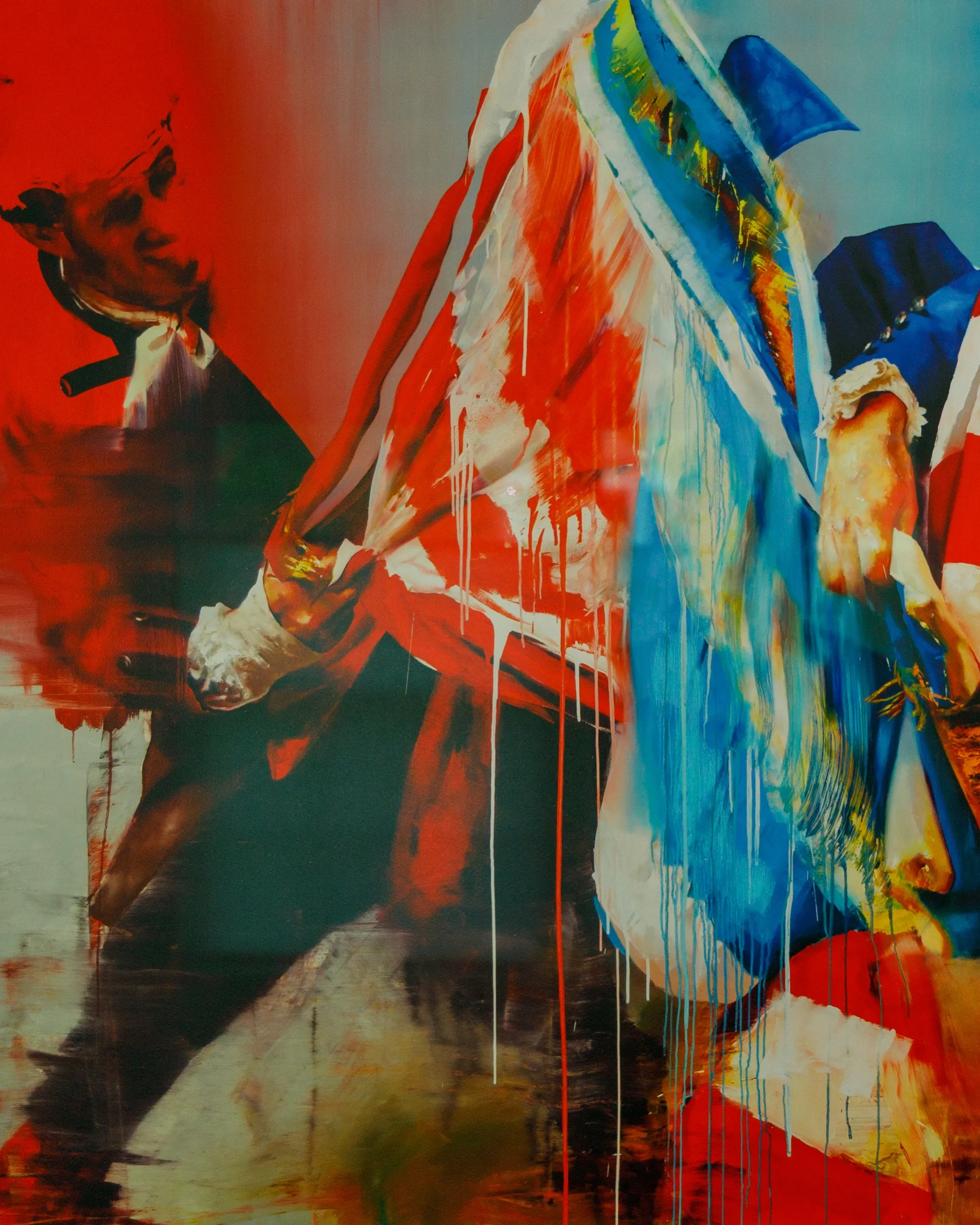
One honest caveat, since precision is the point: when a work is born digital — made on a screen, with no earlier version in any other medium — and the inkjet print is its first and only physical form, “a copy of a work in another medium” stops applying cleanly, and that is a genuinely different and more interesting question. But it is not what tends to be sold as a signed, limited-edition giclée of a painting. That object is a reproduction.
The giclée is the new kind of reproduction; the offset lithograph is the old kind, and it causes more trouble, thanks to an accident of vocabulary. The word lithograph names two genuinely different objects. Lithography was invented in 1796 by Alois Senefelder, who wanted a cheap way to print his plays, and it rests on a simple fact: grease and water don’t mix. In its original form the artist draws straight onto a stone or a metal plate with a greasy crayon or ink — the drawn areas hold ink, the rest is kept damp and rejects it, and the sheet is pulled from that surface. When the artist makes that drawing, the stone is the matrix and the lithograph is an original print. Offset lithography is a different animal. In commercial offset — how nearly every book, magazine, and poster is printed — the image is photographed onto a plate and carried to the paper by a rubber blanket, the plate never touching the sheet, as Tate’s glossary describes it. When the thing photographed is a finished artwork, the result is a photomechanical reproduction: a copy of a work that already exists, made by camera and press. So an offset lithograph that reproduces an existing artwork is a reproduction, not an original print.
The poster I passed on at that booth was an offset reproduction of the linocut’s image; the linocut I bought was the original. That case was easy: the two looked different, and the poster never pretended to be the print. The harder one is where both objects really are lithographs — an artist’s hand-drawn stone lithograph and an offset reproduction of a painting, side by side at a fair, each labelled “limited edition lithograph.” The label can’t tell them apart, and neither can a signature or a number.
The mechanics won’t settle it either. The full workings of an original lithograph — the drawing on the stone, the chemistry that lets grease and water do the sorting — are worth knowing, and we lay them out in what a lithograph is and our broader guide to lithography; but the distinction this essay turns on doesn’t need them, any more than it needs a loupe or a laboratory. What it needs is the provenance question — whether there was a matrix the artist participated in making, or whether a finished work was copied onto a plate — which, having now run past the giclée and the offset lithograph both, is worth stating plainly on its own.
Here, then, is the test that actually matters, stated on its own. It is not a test you run by looking, even closely; it is one you run on the print’s history. What settles whether something is an original print or a reproduction is not how it looks but how it was made — whether it came from a matrix the artist participated in creating, or whether it is a copy of a finished work, produced from a plate or a file. Everything the earlier sections circled — the giclée’s digital file, the offset plate, the signature that moves just as easily onto a reproduction — comes down to that one question of origin.
You answer that question by tracing how the print was made, which is a matter of record rather than inspection. The record sits in two places. One is the edition itself — a pencil signature in the artist’s own hand, a fixed edition written as a fraction, the ordinary conventions of original-print practice, which you can learn to read in our guide to reading an edition number. On their own those marks settle nothing; I’ve seen them appear on reproductions. But inside a documented edition from a known publisher or print shop, they describe an original print pulled from a real matrix. The other place is the source — where the print came from, and whether that source can tell you how it was made. The publishers and print shops I purchase from, Graffiti Prints in the UK and the Adachi Institute in Tokyo among them, can tell you who made the matrix, who pulled the edition, and how large it is, because that is what an edition record is for. A source that can’t tell you any of that is worth treating with caution.
This is the part I want to put plainly, because it is where I part company with a good deal of what gets written about authenticity. You do not need to become a forensic examiner to collect well. You need to ask how the print came to exist and get an answer you can check — from the artist, the publisher, or the print shop. Many will also supply a certificate of authenticity to go with the print, often just for the asking; not every source does, but the good ones tend to. None of this requires technical examination, and none of it requires me to authenticate anything for you. You can ask it of any seller, about any print, which is exactly why I trust it more than any inspection of the object itself: the eye tells you what a work resembles, its history what it is.
Whatever the label — giclée, offset, poster — the whole essay comes down to one distinction: a print is the work itself; a reproduction is a copy of a work that already exists. That is where Paper Matters begins, and I have no stake in which of them you’d rather own.
I want to be careful about one thing, though. The distinction between an original print and a reproduction is easy to mistake for a verdict, and it isn’t one. A reproduction is not a failure or a fake; it is a copy of a work, and that can be a beautiful and entirely honest thing to own — I own plenty, and the poster I passed on at that booth twenty-odd years ago was, by every account, a good one. The point was never to sort objects into the worthy and the unworthy, or to make anyone feel they have been fooled. It was to give you the words to know what you are looking at, so that when you choose — a giclée, an offset print, an original pulled from a matrix — you choose it for what it is.
As for the Jim Pollock linocut — the edition of 600 from that show — it is still on my wall. I didn’t keep it over the poster because the poster was beneath me; I kept it because I wanted the object Pollock actually made — the one his hands and his press brought into the world — and not a reproduction of it, however good. That preference, followed ever since, is most of why Paper Matters exists: a place for the screen prints, woodcuts, and lithographs that are the work itself — and not a likeness of it.
Related materials