SCREENPRINT
What Is a Screen Print?
A screen print is an original work of art made by pushing ink through a fine mesh screen under the artist's direction — not a commercial print or a digital copy.
A screen print is an original work of art: an image built by pushing ink through a fine mesh screen, one screen for each colour, and printed in a small, numbered edition under the artist’s direction. It is not the commercial process that prints a logo onto a T-shirt or a design onto a mug, even though the two share the same basic mechanics. The mesh carries a stencil that blocks the ink everywhere except the shapes meant to print, and a rubber blade — the squeegee — draws the ink across and forces it through the open areas onto the sheet. Build the colours up one screen at a time and the image resolves.
For a collector, the distinction worth fixing early is the one between an original and a reproduction — and it turns on who made the print, not on whether its image is unique. An original screen print is the artist’s own work: the screens prepared and the edition pulled by the artist, or by a printer working closely to their direction. Its image may also exist as a painting — that doesn’t make the print a copy. A reproduction is the reverse: a copy of a finished work made without the artist’s hand, like a giclée of a painting, scanned and machine-printed by a publisher. The two can look alike side by side; what separates them is how the print came to be. This page defines the technique up close; the wider story — where screen printing came from, how it is collected, and the artists who have made it their own — sits in our guide to screen printing.
Among the print families, screen printing is the modern outlier. Where a lithograph is drawn on a flat stone, a woodcut cut in relief, and an etching bitten into metal, a screen print is pushed through a stencil — part of why it arrived late, and why it can read as the most graphic and immediate of the techniques.
How a screen print is made
The screen is a frame stretched with fine mesh — originally silk, now usually polyester — and the whole technique turns on a single idea: block the parts of the mesh you don’t want to print, and push ink through the parts you do. That blocking is the stencil. The artist draws the ink across the screen with the squeegee, a rubber blade held at an angle, and it passes through the open mesh onto the paper in one even pass. Lift the screen, and a colour is down.
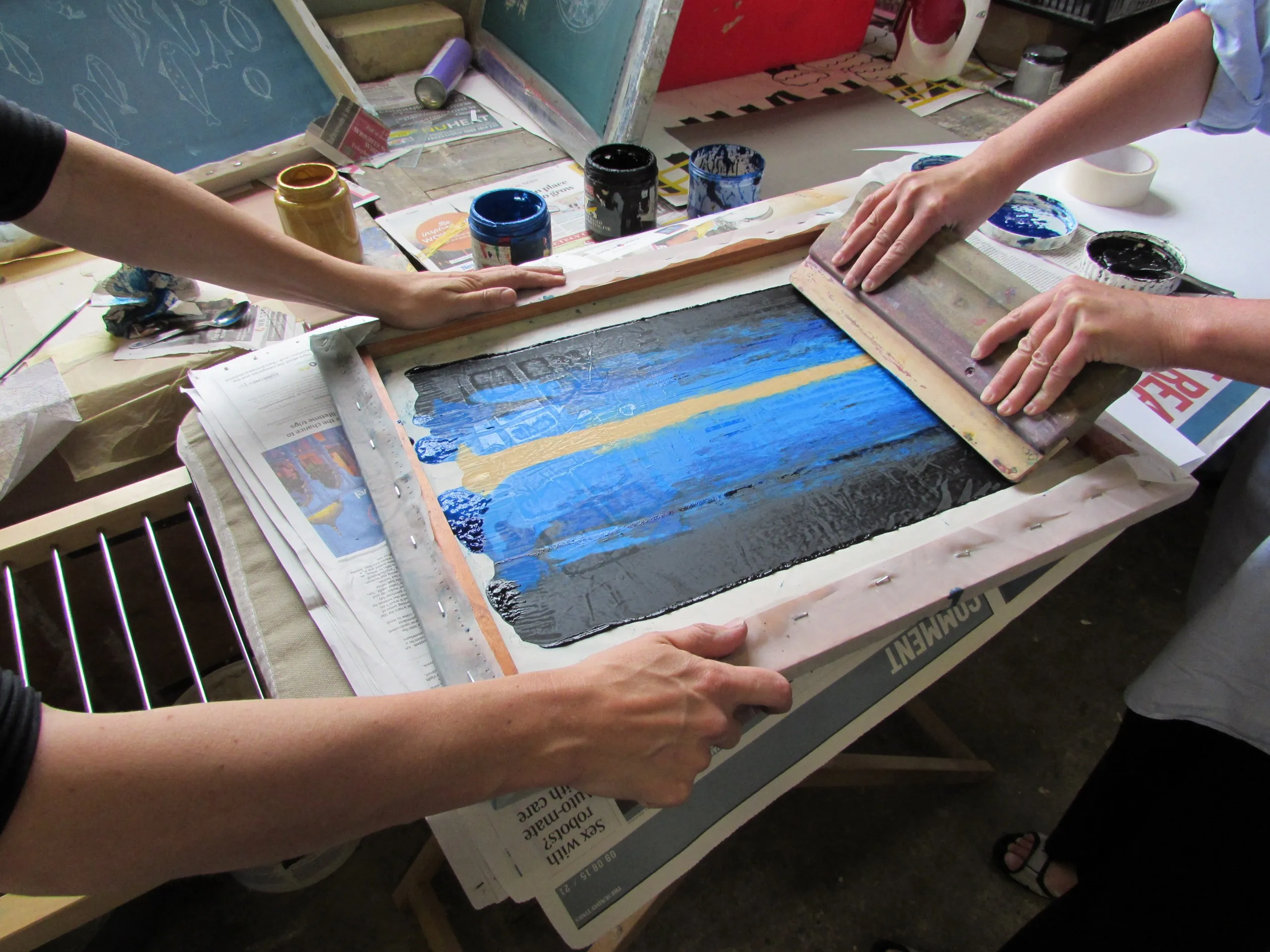
Colour is added one screen at a time. Each new colour needs its own stencil and its own pass, lined up precisely over the last so the shapes meet where they should — a step called registration. A print of any complexity may carry a dozen screens or more, each laid down and left to dry before the next, the image building in flat, opaque layers rather than blending wet on the sheet.
How the stencil is made is where a screen print’s character is set. It can be cut or painted by hand, the artist working the image straight onto the mesh; or it can be made photographically, the design transferred to a light-sensitive coating on the screen — the route that lets screen printing carry photographs and hard-edged graphic imagery. Either way, the result reads the same on the page: areas of solid, saturated colour with crisp edges, the ink sitting on the surface of the sheet rather than soaking into it. That flatness and that edge are the technique’s signature.
Original or reproduction
The question that trips collectors up is rarely “is it printed?” — almost everything on paper is. The real question is who made the print, and how. An original screen print is the artist’s own work in the medium: the artist prepares the screens and pulls the edition, or works hand in glove with a printer who realises it to their direction and approval. The image need not be unique to it. An artist may make a screen print of, or alongside, a painting they have also made — and the print is still an original, its own authored work, sharing the picture with the painting rather than copying it. What it shares is the image; what makes it original is that the artist made the print.
A reproduction is the reverse: a copy of a finished work, made without that hand. The one most often mistaken for an original today is the giclée — a high-resolution inkjet print, usually of a painting, scanned and machine-printed, sometimes issued in a numbered “edition” and signed. A giclée can be a perfectly honest object, a way to live with an image you love at a fraction of the original’s price, but it was generated by a camera and a printer, not authored by the artist as a print, and it is not a screen print. That is the line: an original print is made; a reproduction is copied.
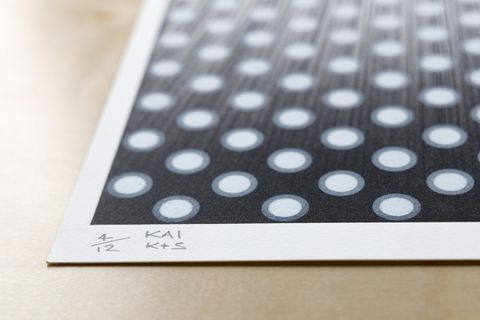
It is worth saying plainly that a signature and an edition number settle nothing on their own — reproductions are signed and numbered all the time, precisely because it makes them read as originals; for the marks themselves, we cover what a print’s edition number records separately. What settles it is the making: whether the artist authored the print, or a machine copied a work that already existed.
Screen print, silkscreen, or serigraph
Three words attach to this one technique, and they cause more confusion than almost anything else about it. Screen print, silkscreen, and serigraph name the same process; what differs is who reaches for each word, and when — not anything about how the print is made. Throughout, we use screen print, the plainest of the three.
The other two carry their histories. Silkscreen is the older name, taken from the silk mesh those early screens were stretched with — the silk since replaced by polyester, but kept alive in the word. It is the term the commercial trade grew up using. Serigraph is the fine-art term, coined in the late 1930s by the print curator Carl Zigrosser to set artists’ screen prints apart from the booming commercial trade around them. He built it from the Latin for silk and the Greek for writing — literally, writing in silk — and meant it to mark an original print: one conceived, made or directed, and approved by the artist, rather than a commercial or reproductive job.
That intent is worth holding onto, with one caution. Zigrosser coined serigraph to name the artist’s original print, but the word itself guarantees nothing — it is a label, and labels get borrowed. A reproduction can be called a serigraph as easily as an original can, and the more elevated the word sounds, the more useful it is to someone dressing up a copy. So the term tells you which tradition a seller is speaking from, not what the object is. For that, the test is the one from the section before: who made the print, and how.
The artists making them today
If the vocabulary makes screen printing sound like a museum matter, the work being made now corrects that quickly. The medium’s flat, saturated colour and its hand-pulled editions have made it a natural home for a generation of artists who came up through stencils and spray paint — among them two whose prints reward a close look, and whom you will meet in full elsewhere on the site.
Martin Whatson (Norwegian, b. 1984) works the line between graffiti and tenderness: grey, weathered, half-abstract grounds broken open by a sudden burst of colour — a butterfly, a ballerina, a scrawl of bright spray. His screen prints carry that contrast into the edition, built up colour by colour, and he often returns to each finished sheet by hand with spray paint, so that no two prints in a run are quite alike. The edition is multiple; the artist’s hand is still in every one.
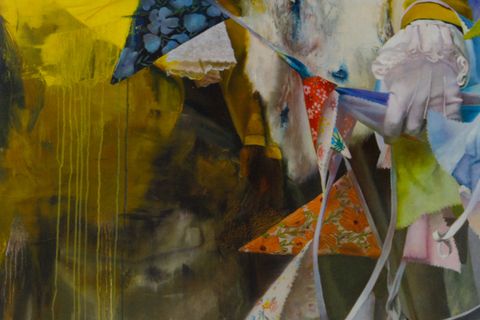
Conor Harrington (Irish, b. 1980) comes at it from the opposite direction — a painter steeped in Caravaggio and the old masters, who sets classically rendered figures against the drips and erasures of the street. His 2023 edition The Blind Exit, published by HENI, was pulled in twenty-eight separate colours, one screen at a time. It is also the clearest illustration of the point made earlier: the same image had already lived as an oil painting and as a mural in Greenwich before Harrington brought it to the screen, and the print is no less his original for that. Three works, one image, each an original in its own right.
That is the living tradition this guide describes from the technical side. For the wider view — where screen printing sits among the print techniques, and how its editions are valued and collected — turn to how screen prints are bought and collected.
FAQs
Is a screen print an original or a reproduction?
An original screen print is the artist's own work — the artist prepares the screens and pulls the edition, or directs a printer who does, then signs and numbers the result. It stays an original even when its image also exists as a painting, because what makes it original is that the artist made the print, not whether the image is found nowhere else. A reproduction is the reverse: a photographic copy of a finished work, such as a giclée, produced without the artist's hand in the printing.
What is the difference between a screen print, a silkscreen, and a serigraph?
In the object, none — all three name the same technique, an image printed by pushing ink through a fine mesh screen. The words differ only in who uses them: "silkscreen" is the older trade term, from the silk the screens were once made of; "serigraph" is the fine-art term coined in the late 1930s to separate artists' prints from commercial work; "screen print" is the plain modern default. No one of them signals a better or different object than the others.
Is a screen print the same as a lithograph?
No — both are original prints made in editions, but by different means. A screen print pushes ink through a stencil on a mesh screen, building the image one colour at a time; a lithograph is printed from a flat stone or plate worked with grease and water. The screen print's colour sits in flat, saturated layers on the surface; a lithograph reads softer and more drawn.
Is a screen print made by hand or by machine?
A screen print is made by pushing ink through a fine mesh screen with a squeegee, one screen per colour — by hand, or with a mechanical press that pulls the squeegee the same way a person would. Both are still screen printing, because in either case the artist or printer chooses the colours and controls how the layers register and build. What it is not is a digital reproduction: a giclée or inkjet that photographs a finished image and reprints it is not a screen print at all. That process, and the limited signed edition it yields, is what makes each sheet an original.
Related materials