LITHOGRAPHY
What is a lithograph?
A lithograph is a print pulled from a flat stone or plate via the chemistry of grease and water — distinct from a woodcut, etching, or photomechanical reproduction.
Two kinds of object travel under the name lithograph, and the difference matters the moment you start looking. In the strict sense, a lithograph is a print made by a planographic process: the image is drawn on a flat stone or plate, printed by the mutual repulsion of grease and water — not carved away as in a woodcut, nor cut below the surface as in an etching. The drawing stays flat, and the press lifts it onto paper.
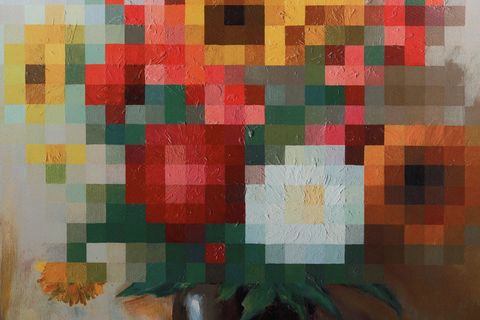
In the looser sense, a “lithograph” can also describe a photomechanical reproduction of a painting — a print made from a photograph of the work, not from a stone or plate the artist drew on. Both pieces of paper can carry the same label, but only the original — pulled from the artist’s own drawing — is an artwork in its own right.
What follows: the planographic principle, the process in brief, and how to tell the original from the reproduction. The wider story — where lithography came from and how it’s practised today — is its own piece.
The planographic principle
To see what makes a lithograph a lithograph, it helps to place it among the print families. The major families differ in where the image sits on the matrix — the block, plate, or stone the artist works on. Relief prints — woodcuts, linocuts — are pulled from a raised surface: the artist carves away everything around the image, inks the raised remainder, and presses paper to it. Intaglio prints — etchings, engravings — work the opposite way: the image is incised below the surface, ink is forced into the recessed lines, and the paper picks the ink up out of the grooves. Planographic prints — lithographs — sit between the two: nothing raised, nothing incised. The drawing and the surface live on the same plane.
What makes a planographic print possible is chemistry, not topography. The artist draws on the stone or plate with a greasy material — tusche, lithographic crayon, oil-based ink. The surface is then chemically treated to fix the drawing and dampened with water: water clings to the undrawn areas but slides off the greasy drawing. When ink (also oil-based) is rolled across the wet stone, it takes only where the grease is. The drawing receives ink; the rest of the surface stays clean. Paper pressed to the stone lifts the inked image off the matrix in one impression.
That single principle — grease attracts ink, water repels it, both sitting on the same flat plane — is the whole basis of the technique. Everything else is craft built on top of it.
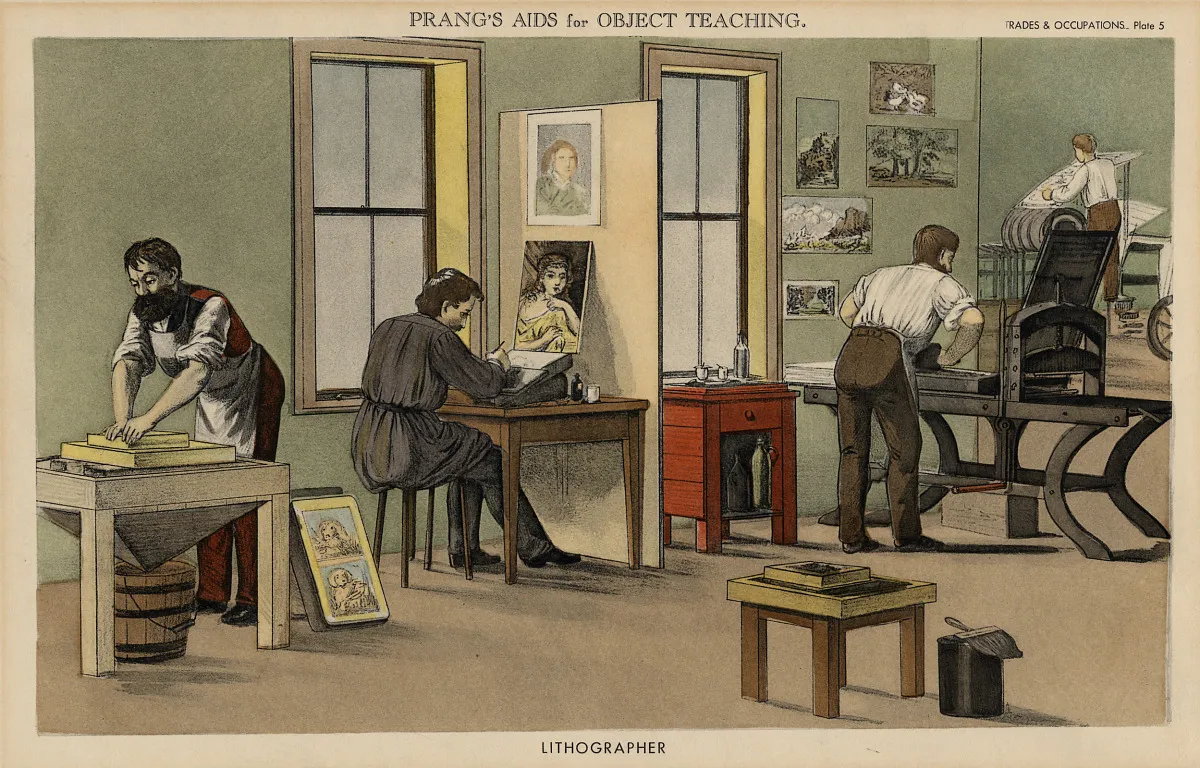
How a lithograph is made
Lithography was invented by Alois Senefelder, a Bavarian playwright, in 1796, while he was looking for a cheap way to print his own plays. He refined the method over the next two decades and published his treatise on it — Vollständiges Lehrbuch der Steindruckerey — in 1818. The chemistry he laid out then is the chemistry used today. Limestone has been joined by aluminium and zinc as the matrix of choice, but the principle is unchanged.
What is specifically lithographic about the process — what sets it apart from any other print — is what the artist holds in their hand: tusche, a greasy ink that takes brush and pen marks much as watercolour takes brushstrokes; lithographic crayon, a waxy stick that handles like a soft pencil. The artist draws as the artist would draw. There is no transfer step, no carving, no incising — just direct mark-making on the surface that will print. The drawing on the stone and the image in the print are the same drawing, separated by one pass of nitric acid, gum arabic, ink, and pressure.
What follows from this is the edition. Once the chemistry is set, the stone can yield many impressions — fifty, a hundred, more — each one pulled from the same hand-worked matrix. Every print in the edition shares that direct line back to what the artist drew. That continuity is what makes the print an original. Without it, the word names something else entirely.
Original lithograph vs. reproduction
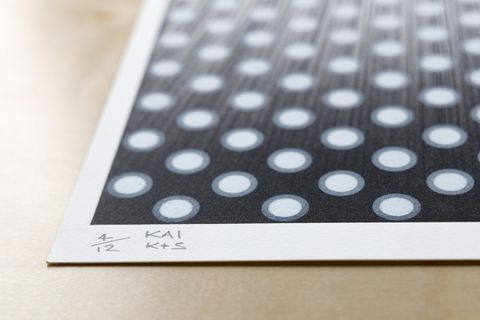
An original lithograph is the artwork. The artist drew on the matrix, a printer pulled an edition from it, and each print in the edition carries the artist’s signature and edition number. What the collector ends up with is a print made — and authorized — by the person who made the image.
A reproduction lithograph is something else. The image was not drawn by the artist on a stone or plate. It was generated by other means — most often by photographing an existing painting and printing it on a press by offset lithography, sometimes by digital inkjet sold as giclée. Whatever the technology, the print on the paper is a reproduction of an artwork, not an artwork in itself.
The distinction matters in three places. On the gallery wall, the original carries the artist’s hand at every step; the reproduction does not. On the auction block, an original lithograph trades as an artwork by its maker; a reproduction trades as a picture of one. On the certificate of authenticity, the words “lithograph” and “original lithograph” do very different work.
Our essay on real prints vs. reproductions takes this up in more detail — what the gap is, why it persists, and how it shapes the market.
Lithography in contemporary practice
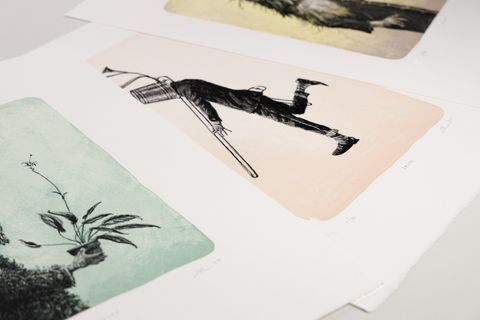
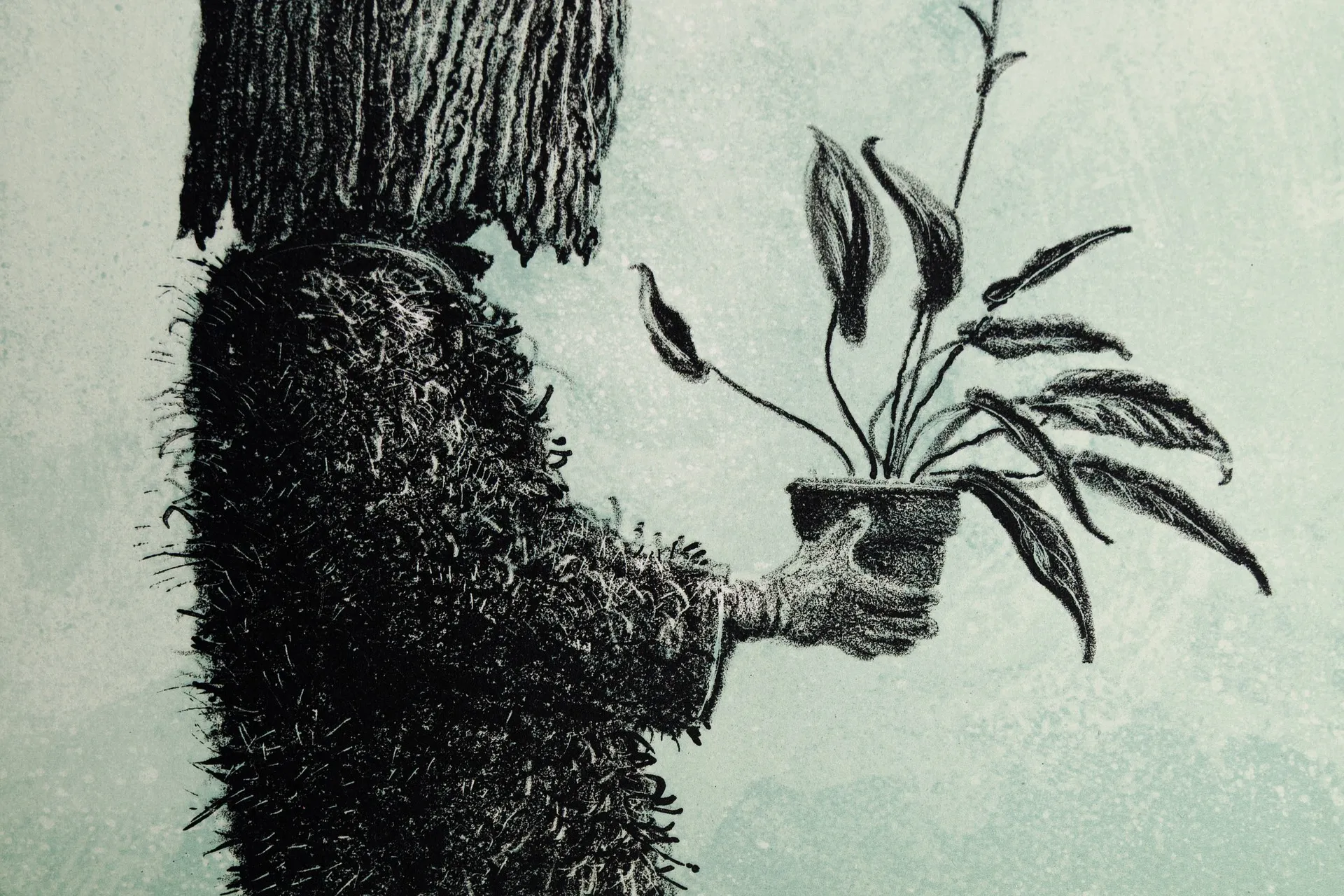
An original lithograph today is still pulled the way Senefelder first pulled one: by hand, on stone, in editions. One example in our collection is Ethan Murrow’s set of three stone lithographs from 2025 — Hunch, Sense, and Belief — printed in Paris on a Voirin flatbed press at a studio co-founded by a Tamarind Master Printer. Editions of eighty. Three solitary figures, three soft fields of color, all drawn with the same straight-faced precision.
Murrow is worth more time than this section gives him. His profile opens it up — his wider practice, the body of work behind these prints, and a closer reading of each.
The chemistry Senefelder set down has not shifted in over two centuries. The use of the word lithograph has. Holding to the strict sense — a print pulled from a matrix the artist worked on directly — is what makes the distinction useful when you’re standing in front of one. When you’re ready to spend more time with the technique — its history, its workshops, the artists drawing on stone today — the longer look at lithography is where to go next.
FAQs
Is a lithograph an original or a copy?
Either, depending on which kind. An original lithograph is the artwork itself — a print pulled from a matrix the artist drew on directly. A 'lithograph' can also describe a photomechanical reproduction of a painting, often offset lithography or a giclée: a print of an artwork rather than an artwork in itself.
Is a lithograph a print or a painting?
A print. A lithograph is pulled from a flat matrix — a stone or plate — using the chemistry of grease and water. It is never a painting, though certain lithographic mark-making (the soft washes of tusche, the granular textures of crayon) can resemble the look of one.
How is a lithograph different from an etching or a woodcut?
A lithograph differs from a woodcut and an etching in how the image is placed on the matrix. A woodcut is a relief print (image carved up); an etching is an intaglio print (image cut down); a lithograph is a planographic print (image drawn on a flat surface, held in place by the chemistry of grease and water).
Are lithographs valuable?
It depends. An original lithograph by a recognised artist — signed, numbered, from a limited edition — can hold meaningful value on the secondary market; price is influenced by the artist, the edition size, the condition, and the provenance. A photomechanical reproduction sold under the same name is a different category of object, and trades at much lower prices.
Related materials