
WOODCUT
Ukiyo-e
Ukiyo-e, the "pictures of the floating world" — a collector's guide to the Japanese woodblock tradition: how the prints were made, their masters, and originals versus reproductions.
Ukiyo-e — “pictures of the floating world” — is the genre of Japanese art that gives the woodblock print its most famous chapter. It flourished in the cities of Edo-period Japan (1603–1868), and at its centre was a single, slippery idea. Ukiyo, the floating world, began as a Buddhist term for the sorrowful world: the plane of suffering and impermanence from which the faithful sought release. In the prosperous, pleasure-loving cities of Edo the word was turned on its head: the same sound, now written with a different character, came to mean the floating world of fleeting delight — to be savoured precisely because it would not last. Ukiyo-e is the art of that second meaning.
In practice that meant images of the city’s pleasures and the people who supplied them: kabuki actors caught mid-gesture, the celebrated beauties of the Yoshiwara pleasure district, sumo wrestlers, and — later, and most famously abroad — landscapes and views. The term takes in paintings too, but it was the woodblock print that carried ukiyo-e to the world, because a print could be made in quantity and sold cheaply, putting pictures into ordinary hands for the first time in Japan. It is the Japanese branch of the woodcut tradition, and the richest single subject within it.
The four hands behind a print
An ukiyo-e print is not the work of one person, and that is the first thing a collector needs to understand. It was made by four sets of hands in turn, each a distinct and specialised craft.
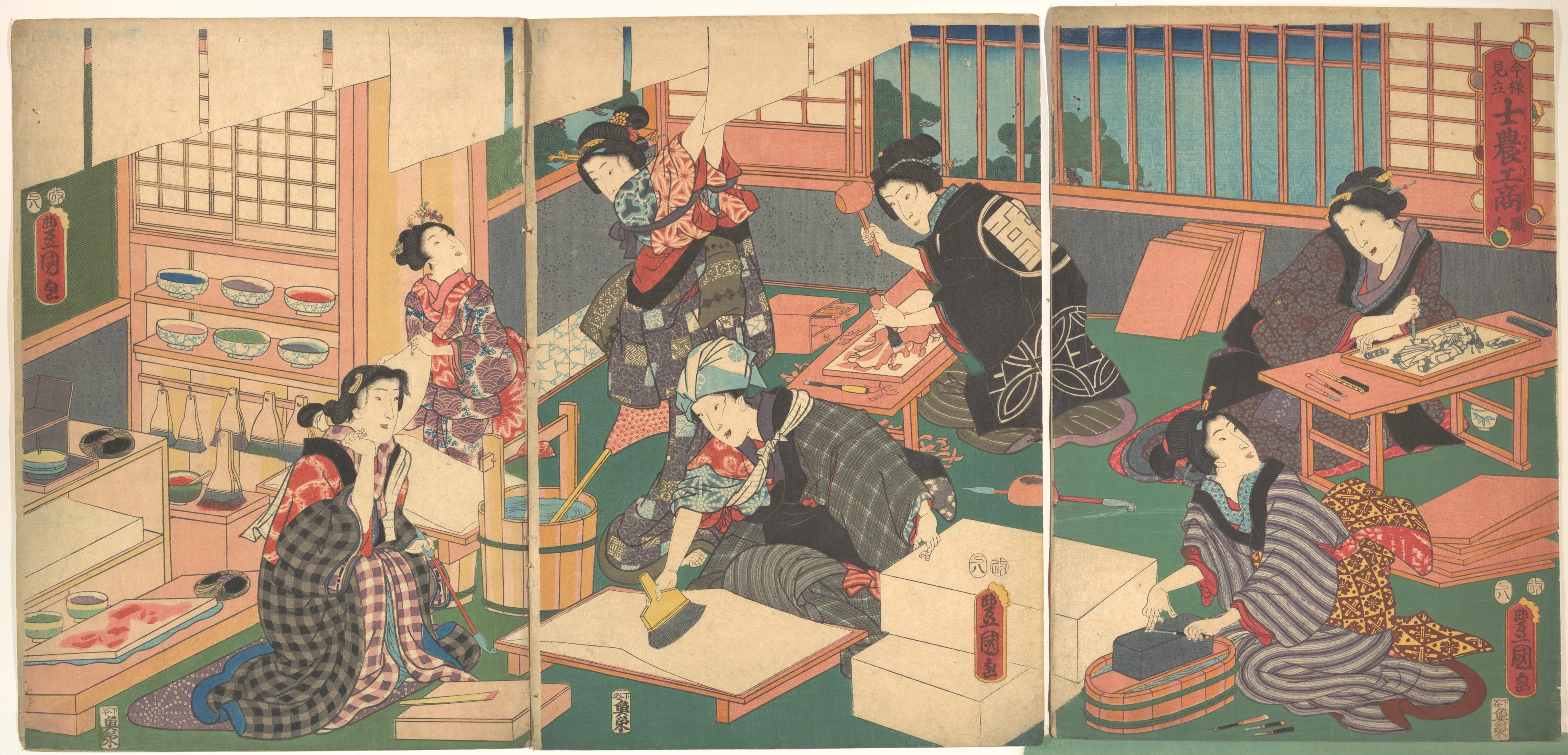
The artist — the eshi — supplied the design, drawn in black ink on thin paper, and that was the whole of the artist’s part: the ukiyo-e designer did not carve the blocks or pull the prints. The carver — the horishi — pasted the drawing face-down onto a block of cherry wood and cut it away, producing a key block for the outlines and a further block for each colour, work so exacting that a master could carve a strand of hair barely a millimetre wide. The printer — the surishi — inked the blocks with water-based colours and laid the paper onto each in turn, rubbing the back by hand with a pad called a baren and using small registration marks, the kentō, to hold a dozen or more colours in alignment. Over all of them stood the publisher — the hanmoto — who commissioned the design, financed the work, judged what would sell, and carried the finished prints to market.
For a collector, the consequences run deep. The first concerns authorship: we speak of “a Hokusai,” but Hokusai neither carved nor printed the sheet, and the carver and printer who realised his design went, by custom, unrecorded. The second concerns ownership, and is the more surprising — the blocks belonged not to the artist but to the publisher, who in effect held the copyright, so that the artist had no claim on the printing of his own design. And the third follows from the first two: the “original” of an ukiyo-e print is less a single, precious object than a process — a collaboration capable of yielding hundreds or thousands of impressions from the same blocks. That alone changes what the word “original” can mean for a print of this kind.
The masters
The genre’s reputation rests on a relatively small number of artists, and it helps a collector to know them by the subjects they made their own.
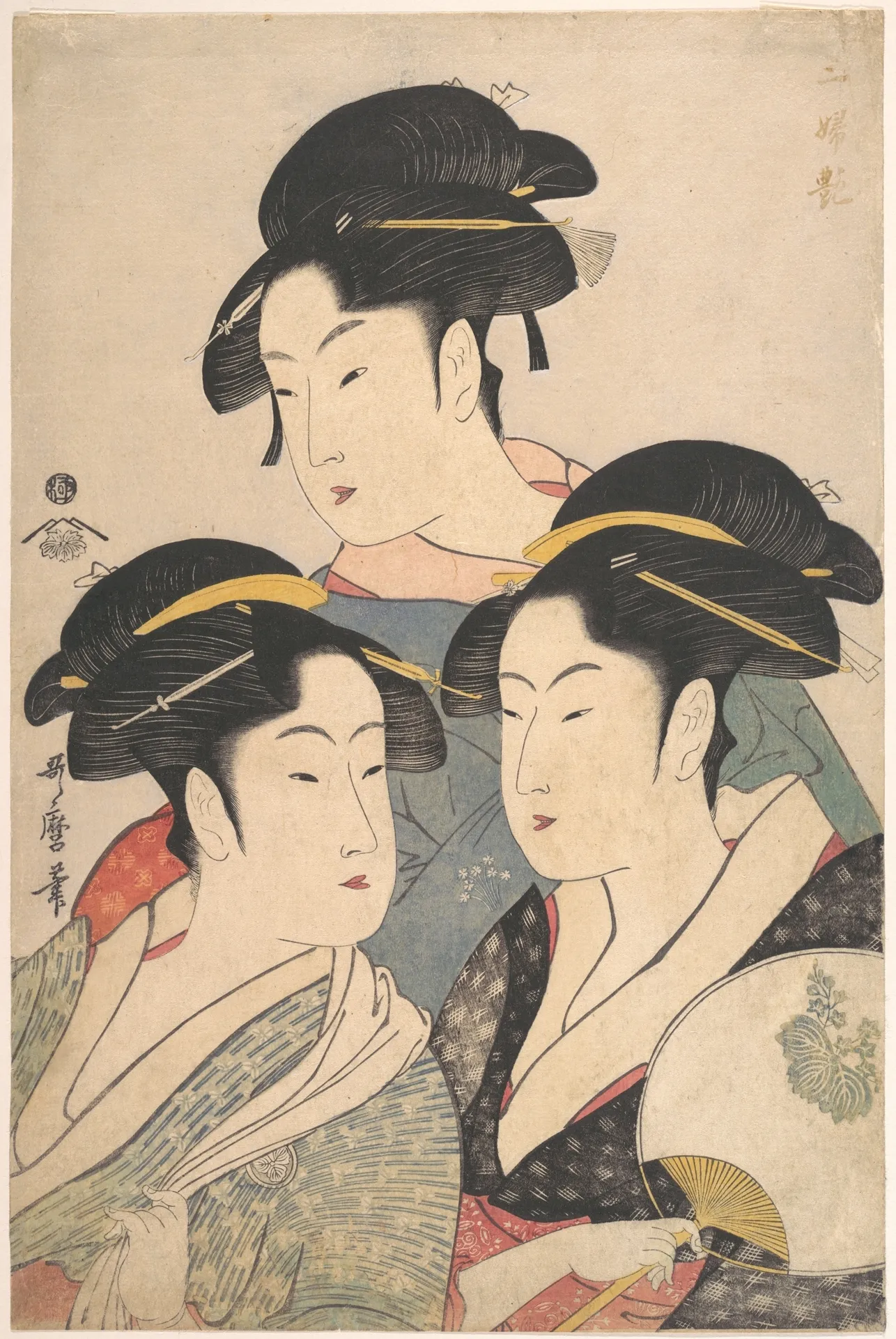
The earliest fame belonged to the figure painters. Kitagawa Utamaro (c. 1753–1806) was the supreme artist of bijin-ga, pictures of beautiful women, and above all of the ōkubi-e, the “large-head” portrait that crops close to a courtesan’s face and shoulders and treats her as an individual rather than a type. He worked with the great publisher Tsutaya Jūzaburō, and fame did not protect him: in 1804 he was arrested and manacled for a print of a sixteenth-century warlord, and died two years later. For the same publisher, and in the same decade, worked the strangest figure in all of ukiyo-e — Tōshūsai Sharaku, who across about ten months of 1794 and 1795 produced some 140 portraits of kabuki actors, caught mid-gesture and drawn without flattery, and then vanished so completely that his identity is still unknown. His unsparing likenesses sold poorly in their day; they are treasured now.
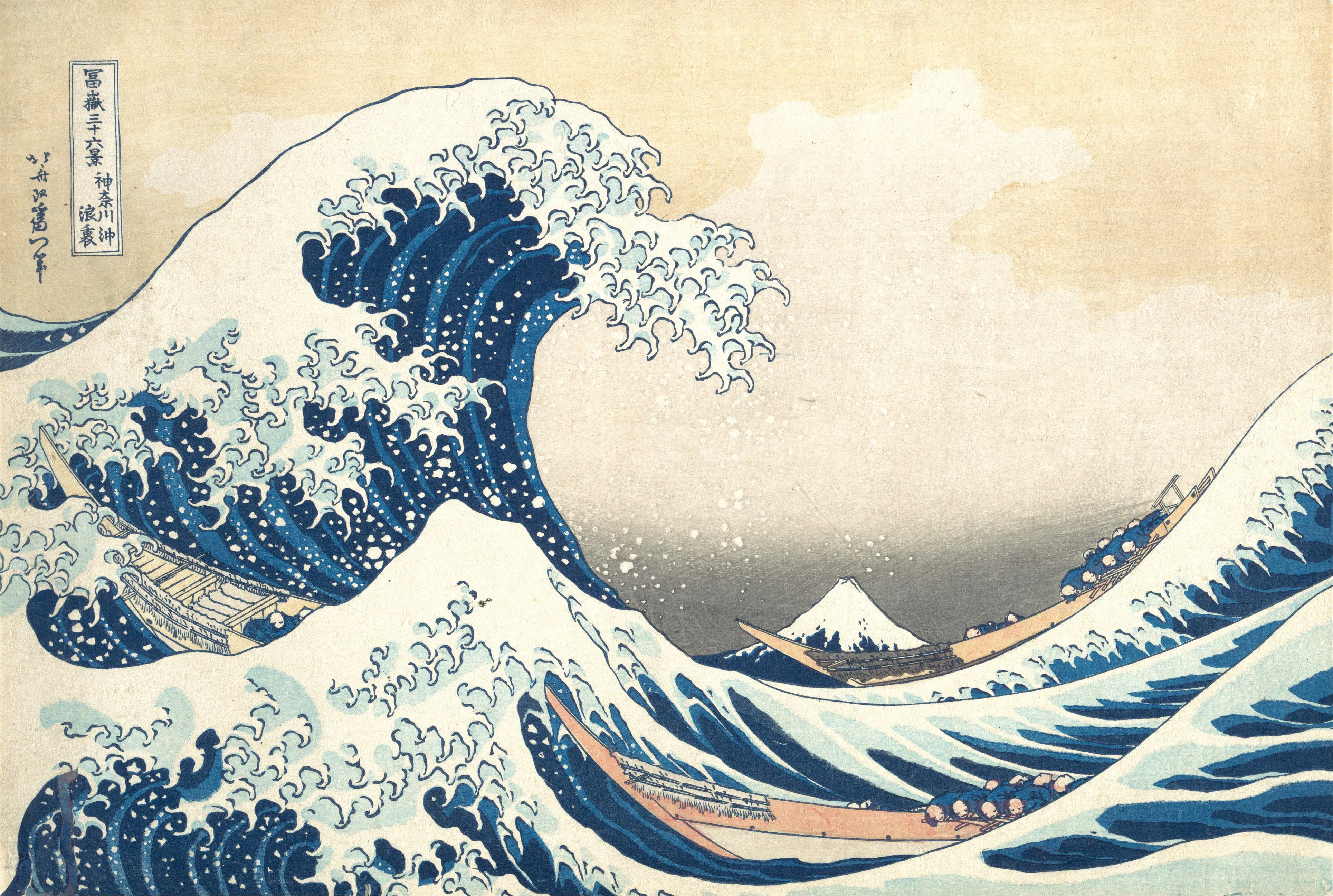
It was landscape, later, that carried ukiyo-e to the wider world. Katsushika Hokusai (1760–1849) published his Thirty-six Views of Mount Fuji around 1830–32 — the series that contains Under the Wave off Kanagawa, the Great Wave, an impression of which is among the treasures of the Metropolitan Museum of Art and the image itself one of the most reproduced in the world — working a palette built on imported Prussian blue.
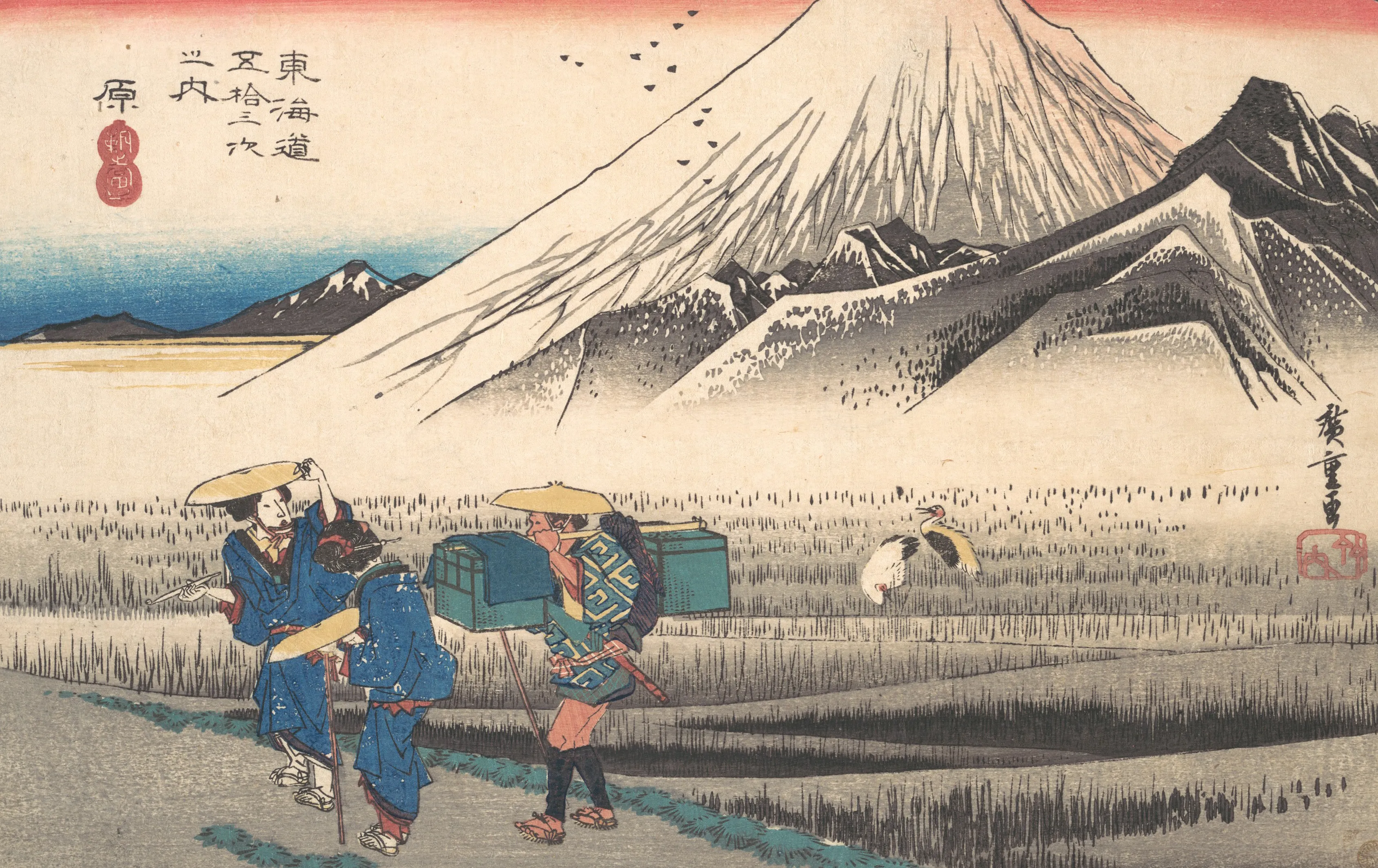
Utagawa Hiroshige (1797–1858) followed with the Fifty-Three Stations of the Tōkaidō (about 1833–34), scenes along the great highway between Edo and Kyoto, and later the One Hundred Famous Views of Edo; where Hokusai is bold and formal, Hiroshige is atmospheric, a poet of rain and snow and distance.
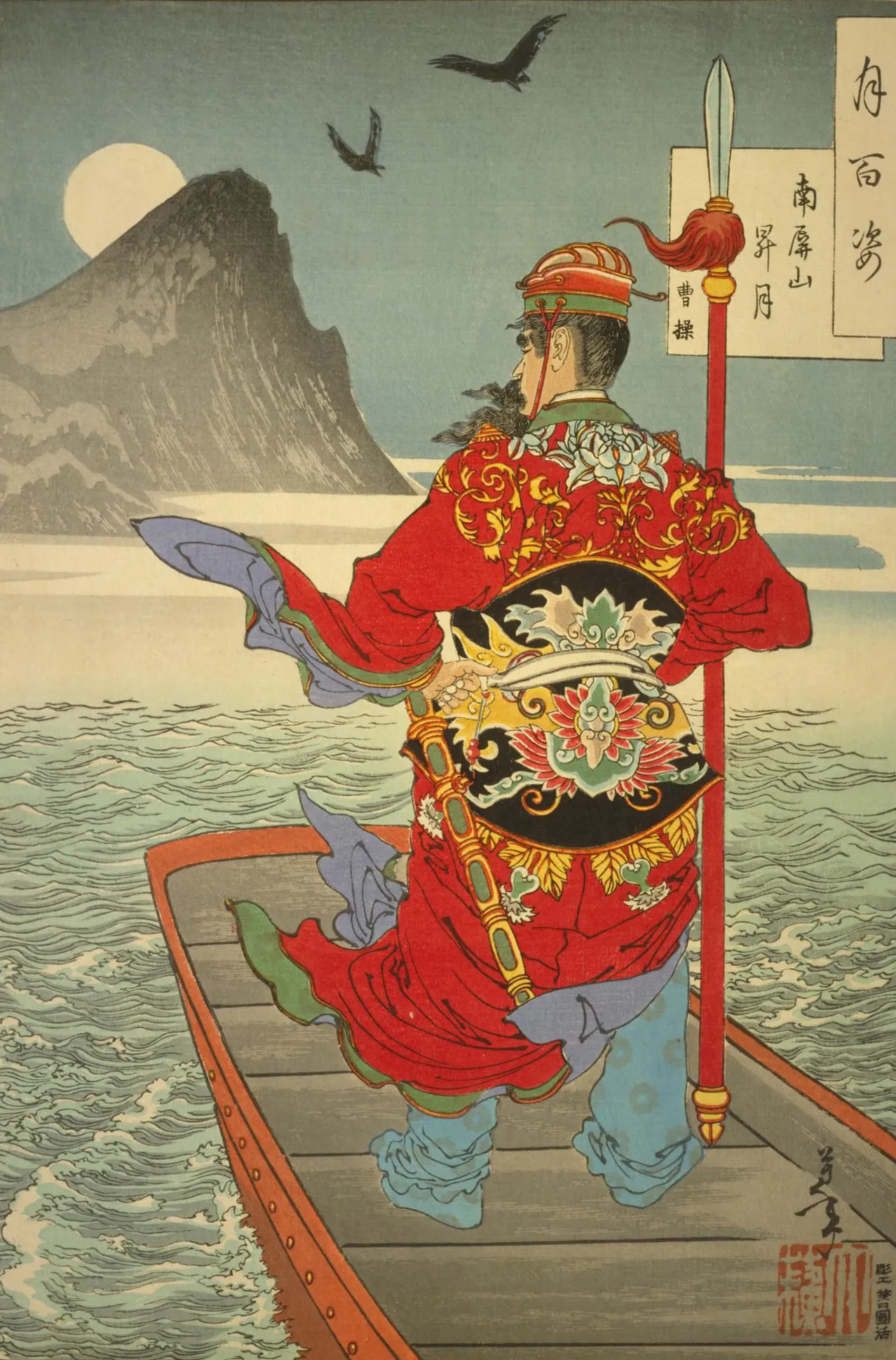
Two further names round out the picture. Utagawa Kuniyoshi (1797–1861) was the master of the warrior print, the musha-e; his breakthrough series of the late 1820s, the heroes of the Suikoden, made swaggering legend out of a Chinese novel. His pupil Tsukioka Yoshitoshi (1839–1892) carried the art across the upheaval of the Meiji Restoration and is often called the last of the great masters — his One Hundred Aspects of the Moon, published in the years up to his death and held complete by the Library of Congress, is the masterpiece of that late, twilight phase.
Originals, later impressions and reproductions
What, then, is a collector actually buying? Because the ukiyo-e “original” was a process rather than a single object, the prints on the market today fall into a few distinct kinds, and the gap between them in value can be very wide.
The most prized is an early impression — shozuri — pulled when the blocks were fresh and the publisher’s standards high, in the artist’s own lifetime. As a popular design sold, the same blocks were printed again and again; cherry wood is durable enough to yield thousands of impressions, so later printings — atozuri — from worn blocks, often with simplified colour and on poorer paper, are common, and worth markedly less even though they came from the very same blocks. Then there are reproductions proper — fukkoku, the hand-cut recuts we describe on the woodcut pillar: new blocks carved to carry an old design after the originals were lost or worn out. A great many were made in the late nineteenth and early twentieth centuries for the export and tourist trade, and they are still made today — entirely by hand, often very beautiful, and not to be confused with the photomechanical posters that are not woodblock prints at all. They are simply not the historical original, and are priced accordingly.
This is also why edition numbering, in the Western sense, has no place in historical ukiyo-e. These were open commercial editions, printed to demand with no fixed run and no number on the sheet; the fraction a collector reads on a modern limited print belongs to a later convention entirely. We set that convention out, and explain where the Japanese tradition departs from it, in our guide to reading an edition number.
How, in practice, to know which of these you are holding is a genuinely hard question — and not one to be settled by a checklist of marks on the paper. The dependable answer is the unglamorous one: buy from sellers who are transparent about an impression’s age and origin, ask for provenance, and, for anything of consequence, seek an expert opinion. We take up the wider question of telling a real print from a reproduction in a separate essay.
The floating world abroad
Ukiyo-e had a second life its Edo publishers could never have foreseen. Japan had been all but closed to foreign trade for two centuries when American warships forced it open in 1853; in the decades that followed, the prints travelled west — famously, in part, as the wrapping around exported porcelain — and landed in a Paris hungry for something new. The French critic Philippe Burty gave the enthusiasm a name in 1872: Japonisme.
What the prints offered was not a stock of exotic motifs to be copied but a different grammar of picture-making. Where European art had been built on modelling, depth and a single fixed viewpoint, ukiyo-e showed flat planes of colour bounded by confident outlines, bold asymmetry, and compositions cropped at unexpected angles, as though the eye had simply fallen on the scene. That lesson, far more than any kimono or fan, is what changed Western painting.
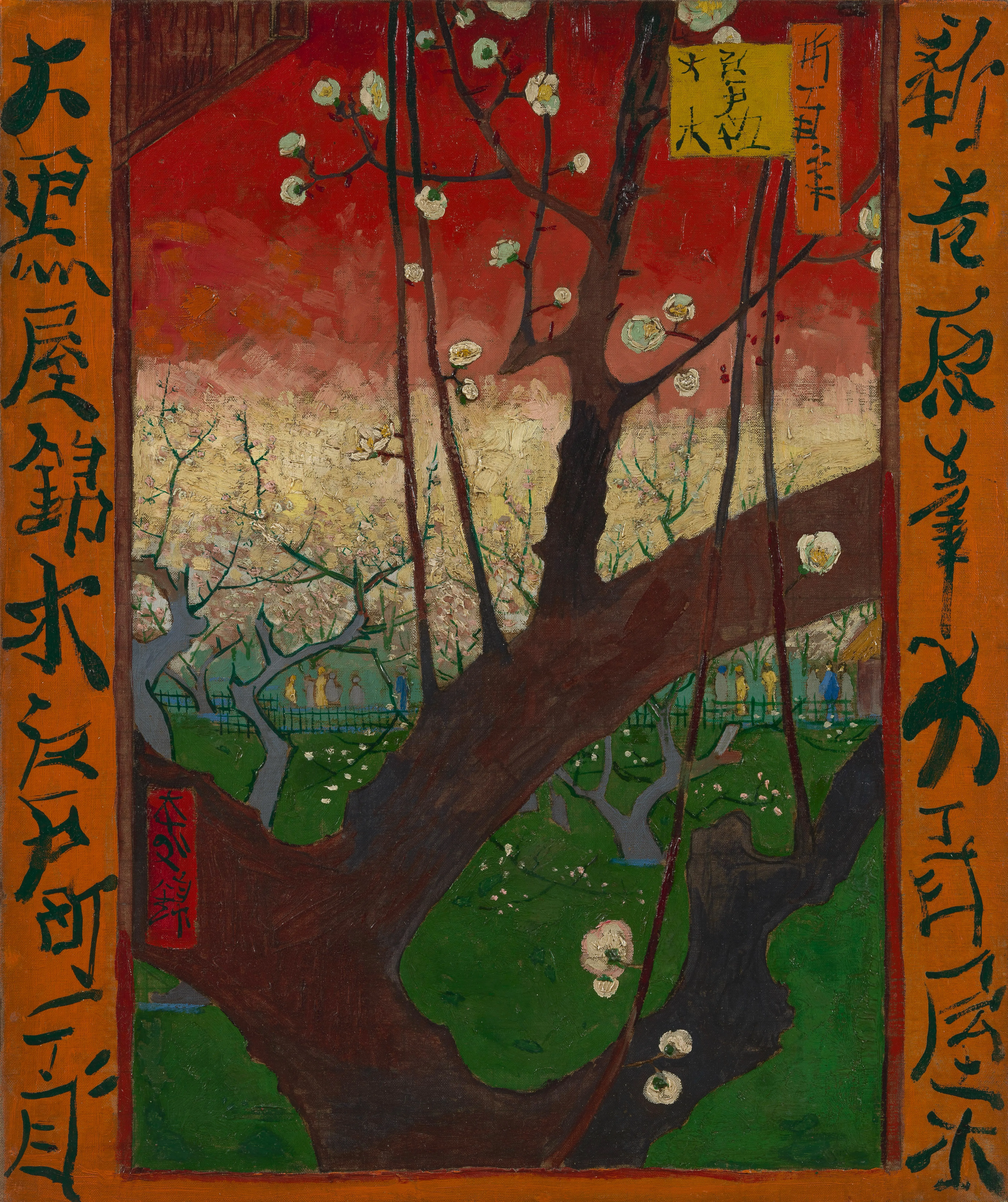
The traces are specific and easy to find. Van Gogh admired the prints so openly that he copied several of Hiroshige’s One Hundred Famous Views of Edo in oil, keeping the flat colour and dark outlines intact — his Flowering Plum Orchard of 1887, after Hiroshige, hangs today in the Van Gogh Museum. Mary Cassatt rebuilt her scenes of women at domestic tasks on Japanese lines, her colour prints openly indebted to Utamaro’s beauties. Toulouse-Lautrec carried the flat colour and dramatic cropping straight into his Montmartre posters; Degas took from the prints their oblique angles and high vantage points; Monet collected them avidly. The floating world, made to be sold cheaply on the streets of Edo, had quietly rewired the art of Europe.
A living art
Ukiyo-e is often spoken of in the past tense, as though it ended with the Edo period. It did not. As the old commercial trade faded in the Meiji era, the tradition was deliberately revived in the early twentieth century under the name shin-hanga — “new prints” — a movement led not by an artist but by the Tokyo publisher Watanabe Shōzaburō (1885–1962). Watanabe’s insight was to keep the old machinery intact: shin-hanga preserved the full collaborative system of artist, carver, printer and publisher — unlike the parallel sōsaku-hanga, or “creative prints,” in which the artist did everything alone — and turned it to new designs, often touched by Western light and perspective and aimed largely at collectors in America and Europe. Its great figure was Hiroshi Yoshida (1876–1950), a Western-trained painter who came to the woodblock through Watanabe in 1920 and made luminous landscapes that travelled the world.
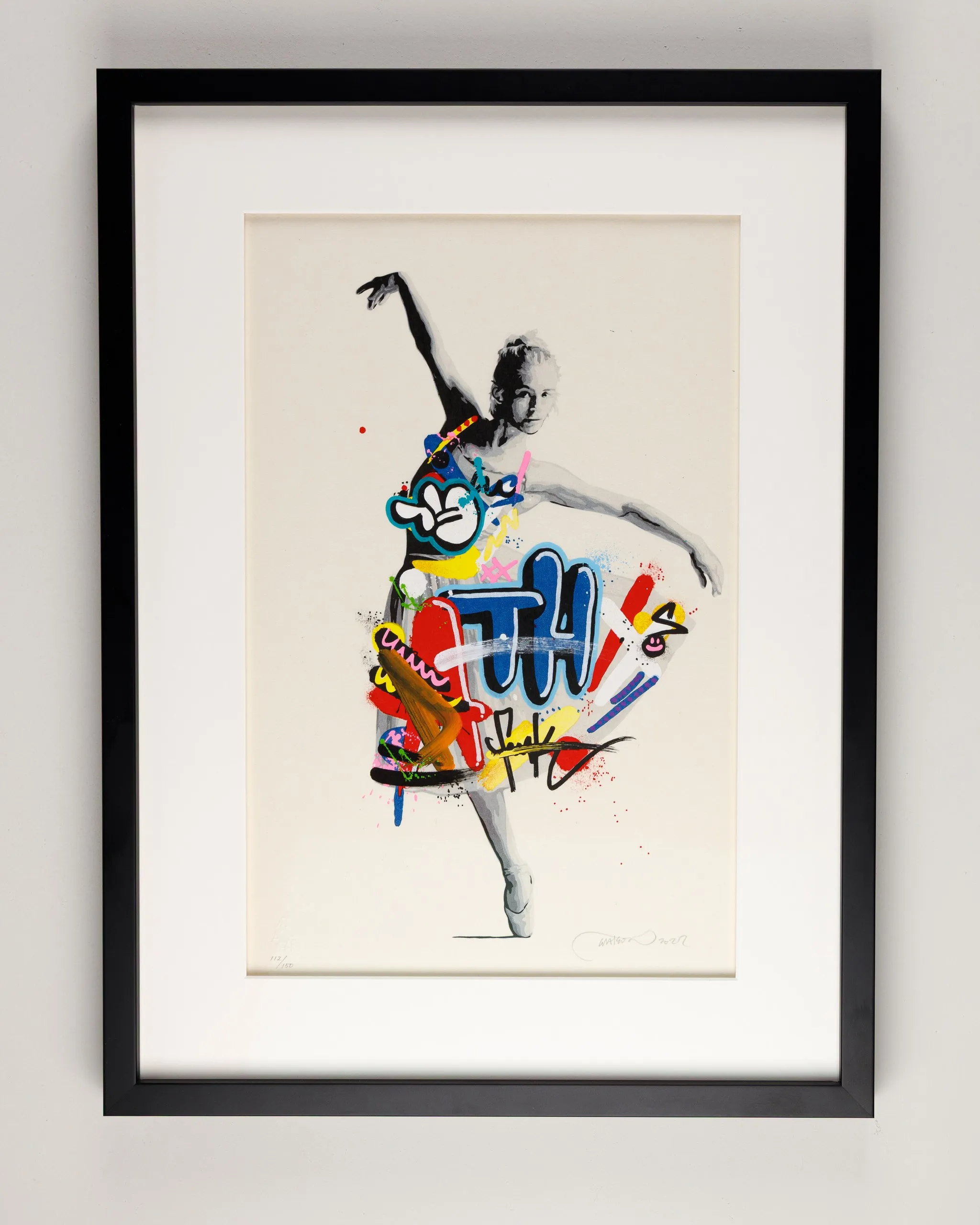
That continuity has never since been broken. The same collaborative craft is practised today at the Adachi Institute of Woodcut Prints, founded in Tokyo in 1928, which has kept the technique alive both by reproducing the Edo masters and by making wholly new prints with living artists. One of those is the Norwegian street artist Martin Whatson, whose Equilibrium (2022) is a contemporary ukiyo-e in the most literal sense: his graffiti-and-stencil dancer, designed by Whatson and carved and printed by Adachi’s artisans in the full traditional manner. The craft is the old one; the authorship is modern — Equilibrium is signed by Whatson and is his own work, where an Edo print, made by hands whose names were rarely recorded, belonged to the publisher who commissioned it. We tell the story in full in our profile of Martin Whatson.
The floating world, in other words, is still being printed. What began as cheap pictures for the townspeople of Edo is now among the most admired and most studied bodies of work in the history of art — and, in the hands of a few dedicated studios, a living craft a collector can still buy new.
FAQs
What does "ukiyo-e" mean?
Ukiyo-e means "pictures of the floating world." It is the genre of Japanese woodblock prints — and paintings — that flourished in the Edo period (1603–1868), depicting the pleasures of city life: kabuki actors, courtesans, sumo and, later, landscape. The term carries a twist: ukiyo began as a Buddhist word for the "sorrowful world" of suffering, and was reread through a same-sounding character as the "floating world" of fleeting delight.
Who are the most famous ukiyo-e artists?
The best known are the two landscape masters — Katsushika Hokusai (1760–1849), who made the Great Wave, and Utagawa Hiroshige (1797–1858) — together with Kitagawa Utamaro (c. 1753–1806), the master of beauty prints; the enigmatic actor-portraitist Tōshūsai Sharaku (active 1794–95); Utagawa Kuniyoshi (1797–1861), known for warrior prints; and Tsukioka Yoshitoshi (1839–1892), often called the last of the great masters.
Are ukiyo-e prints originals or reproductions?
Both exist, which is exactly what makes the question subtle. Because ukiyo-e was made by a team — designer, carver, printer and publisher — and printed in quantity, the "original" was never a single object but a process yielding hundreds or thousands of impressions. An original proper is an early impression from the artist's lifetime; later printings from the same blocks, and modern hand-cut reproductions (fukkoku) from newly carved ones, are genuine woodblock prints too, but not the same thing, and worth far less. How to tell them apart is the subject of our essay on real prints and reproductions.
Are old Japanese woodblock prints valuable?
Some are highly valuable and many are not — and age alone is no guide. A fine early impression of a famous design by a master such as Hokusai or Hiroshige can be very valuable; a worn later printing, or one of the many hand-made reproductions made for export from the late nineteenth century onward, is far more modest. Value turns on the artist, the quality and age of the impression, condition and provenance — and, as ever, we don't appraise or advise on what a particular print is worth.