
TECHNIQUE · GUIDE
Woodcut
Woodcut is the oldest of the printmaking techniques — a collector's guide to the relief process, the European and Japanese traditions, and how to read a woodblock print.
Woodcut is the oldest of the printmaking techniques, and in some ways the most direct: the image is cut into the surface of a block of wood, and whatever the carver leaves standing is what prints. It is a relief process — the raised areas of the block take the ink and the cut-away areas print blank — which places woodcut in the same family as wood engraving and linocut, and opposite the intaglio processes such as etching, where the ink instead lies in lines cut below the surface. The Metropolitan Museum of Art describes it, simply, as the oldest form of printmaking, and the phrase is meant literally: woodblock printing was in use in China by the ninth century and reached Europe in the fourteenth.
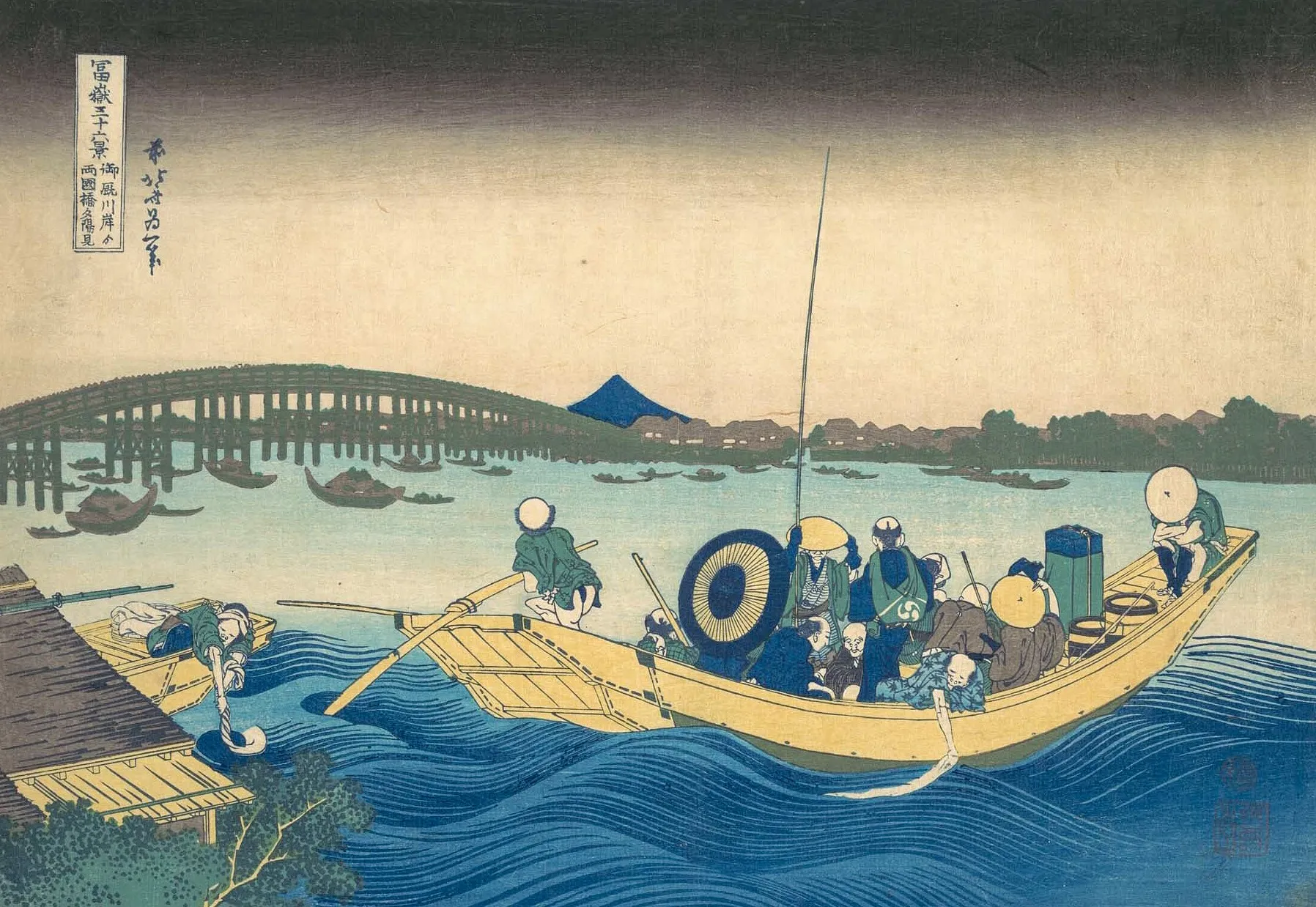
For a collector, that directness is much of the appeal. A woodcut wears the marks of its own making more openly than almost any other kind of print — the grain of the wood, the track of the knife, the decisions about what to cut away and what to leave standing. It is also a technique with two great and largely separate lineages: the European tradition, and the Japanese woodblock tradition, of which ukiyo-e is the most famous chapter. That a single word should cover objects as different as a Dürer woodcut and a Hokusai print tells you how much room there is inside it — and we take the two traditions up in turn below.
Woodcut, wood engraving, linocut
It helps to place woodcut among its near relations first, because the names are often used loosely. All three are relief techniques — the image prints from the raised surface of the block — and they differ mainly in the matrix, the surface that is carved. A woodcut is cut on the plank, along the side grain of the wood, with knives and gouges. A wood engraving is cut into the end grain — the cross-section — of a very hard wood, with a fine tool called a burin, which is what gives it a much denser, finer line. Linocut is cut not in wood at all but in linoleum, which has no grain and so gives way evenly in any direction. The difference is worth knowing when you are reading a print: a passage of fine white hatching is far more likely to be a wood engraving than a woodcut. We take the full comparison up separately.
Two traditions
The relief principle is simple enough that it was discovered, and raised to art, more than once. Two traditions matter most to a collector, and although they share that principle they developed largely apart — different woods, tools, papers and purposes.
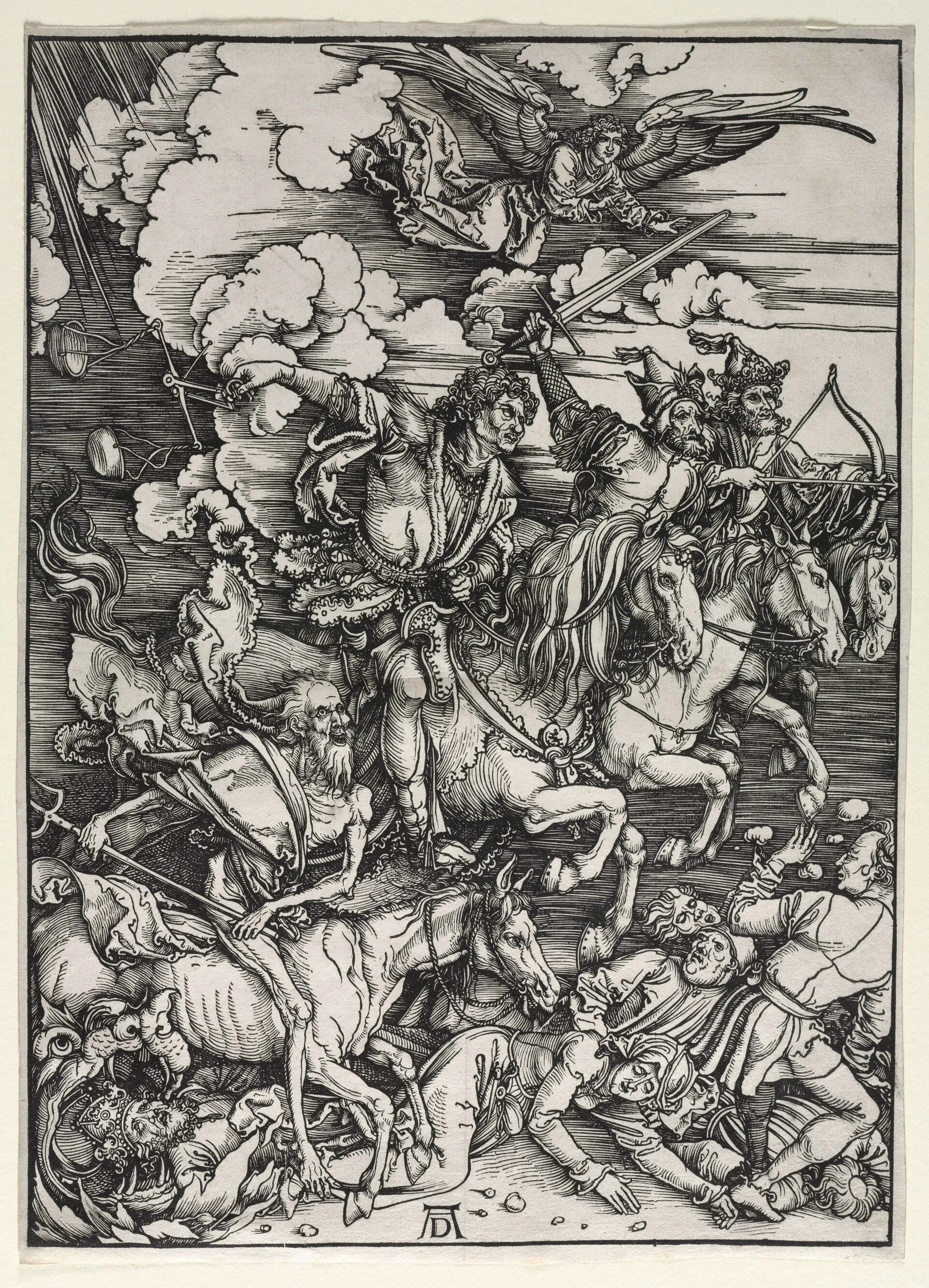
In Europe, the woodcut began as a workshop medium for cheap devotional images and book illustration, and was made into high art by one man in particular. Albrecht Dürer (1471–1528), working in Nuremberg, brought to the woodblock a density of line and tonal modelling it had never carried before. His Apocalypse — fifteen woodcuts published in 1498 to illustrate the Book of Revelation — made his name across Europe; the National Gallery of Art calls that first edition the most important work in the entire history of printmaking. What Dürer proved was that a print cut in wood could hold its own against painting: that it was a medium for ambitious art, not only for illustration.
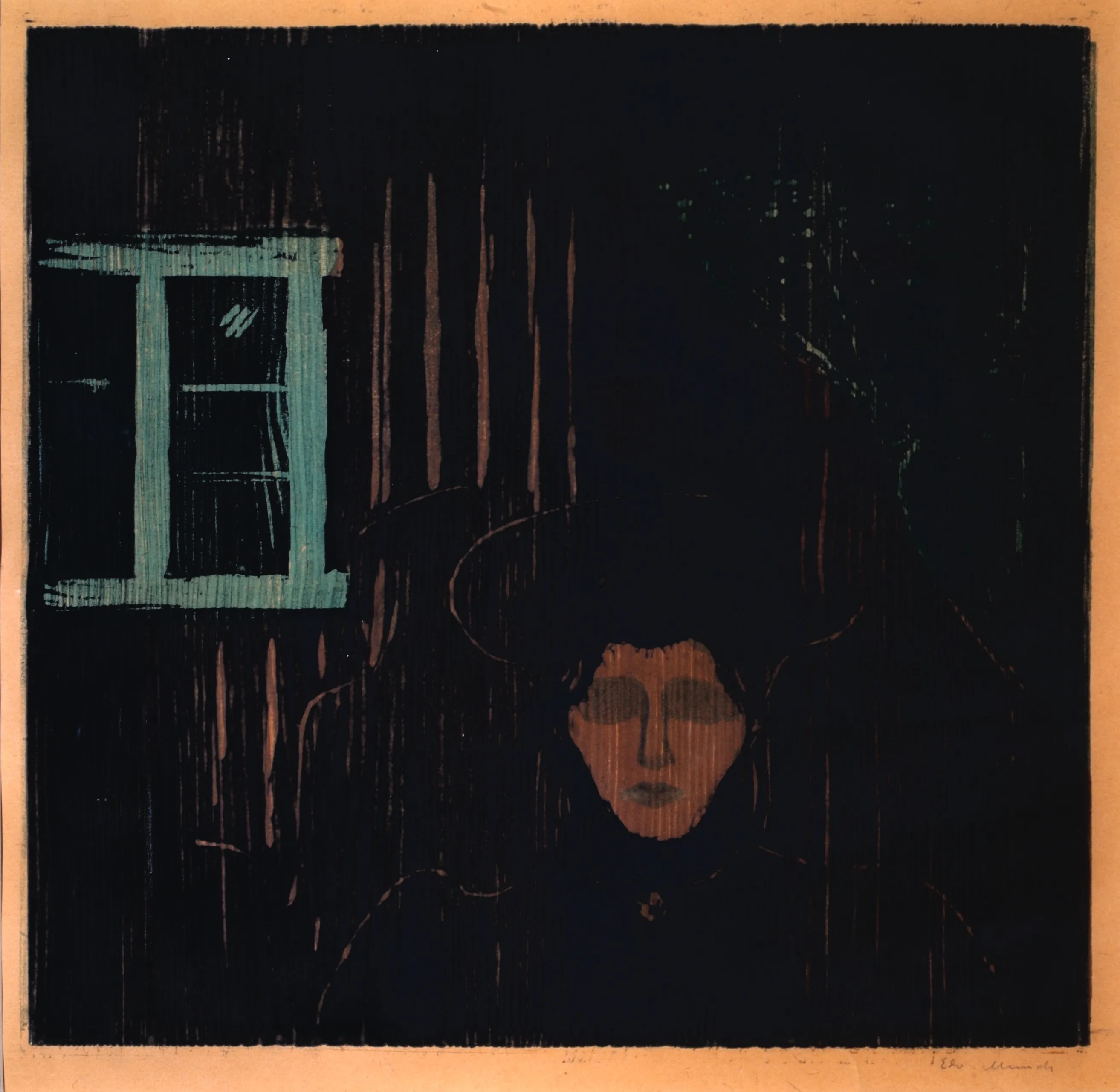
If Dürer is the tradition’s foundation, Edvard Munch is its great modern innovator. Rather than disguise the block, Munch made its character part of the picture — letting the grain of the wood read as expressive texture, and cutting his blocks apart with a fretsaw so he could ink the pieces separately in different colours and reassemble them like a jigsaw to print in a single pass. It is that method that leaves the bare white lines between areas which give a print such as Moonlight (1896) its charged stillness. The woodcut, in his hands, became a medium of feeling.
The other great lineage is Japanese. There the woodblock print reached its height in the genre known as ukiyo-e — the “pictures of the floating world” of Edo-period Japan — through artists whose names now stand for the whole tradition: Hokusai, whose Great Wave is the best-known of all Japanese prints, and Hiroshige, among others. The Japanese tradition worked quite differently from the European, collaborative rather than solitary and built on a system of publishers and specialist craftsmen, and it is rich enough to deserve its own treatment. We take it up in full in our guide to ukiyo-e.
A living tradition
It would be easy to treat all this as history — a Renaissance master and an Edo genre, safely in the past. It is not. The Japanese woodblock tradition is still practised, by much the same division of hands it has always used, and a collector can own a print made in it today.
The clearest keeper of that continuity is the Adachi Institute of Woodcut Prints, which has worked in Tokyo since 1928. It runs as a single studio in which publisher, carver and printer work together — the same collaborative system that produced ukiyo-e in the Edo period — and over nearly a century it has reproduced some twelve hundred of the classic prints, keeping the carving and printing techniques in living use rather than letting them lapse into museum knowledge. Alongside that preservation work, it makes new, original prints with contemporary artists.
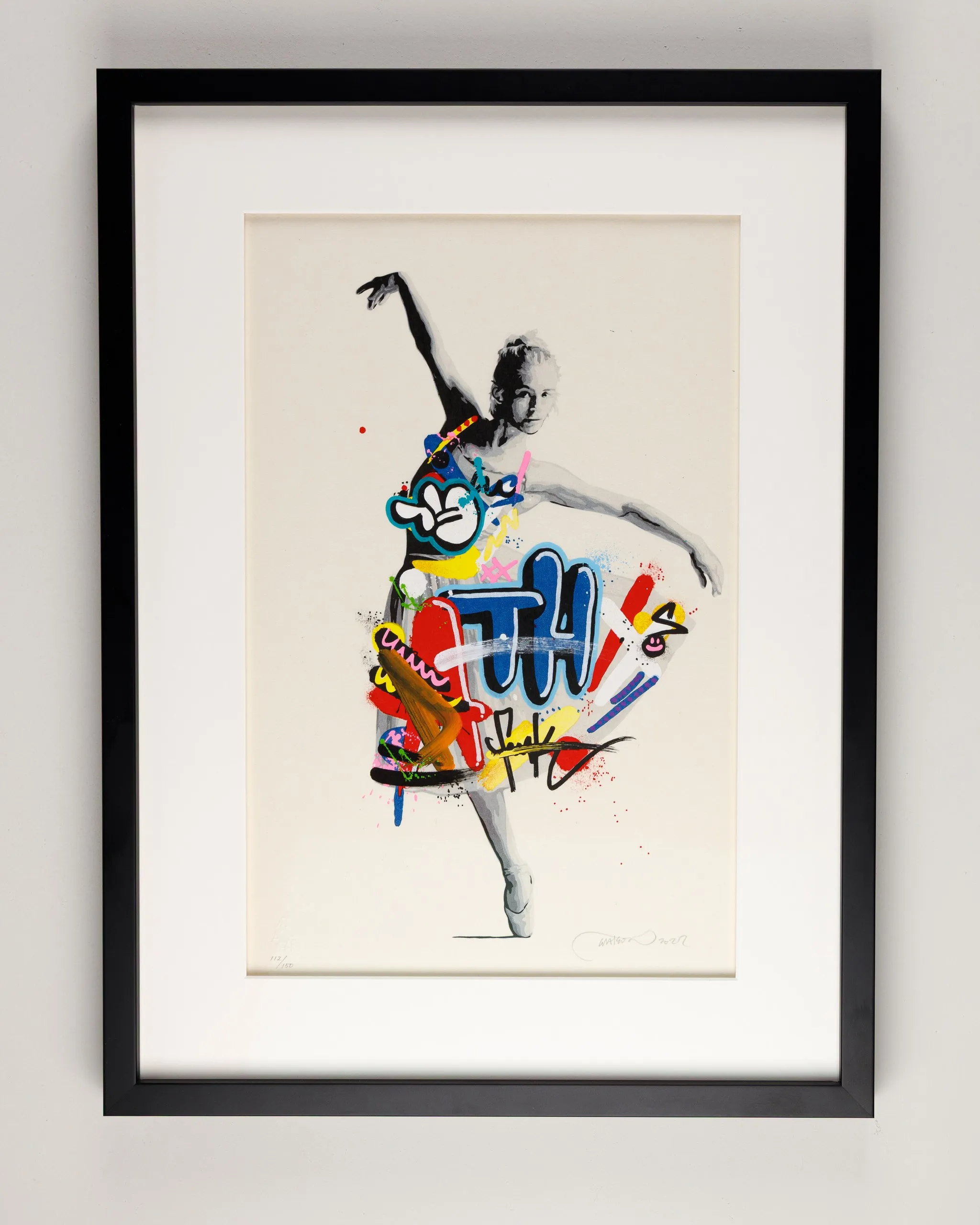
One of those artists is Martin Whatson, the Norwegian street artist whose work we examine in a dedicated profile. His Equilibrium (2022) is a striking case: his signature motif — a dancer rendered in stencil and overlaid with graffiti — was carved and printed by Adachi’s artisans in the full traditional manner, on Echizen kizuki hosho washi handmade by Ichibei Iwano, a designated Living National Treasure, then hand-finished by the artist so that each of the 150 impressions is singular. It is a centuries-old Japanese tradition turned to an entirely contemporary image — and the plainest answer to anyone who imagines the woodblock belongs only to the past.
Reading a woodblock print as a collector
A woodblock print is a phrase that repays unpacking before you buy, because the same four words cover several quite different objects. There is the original impression — pulled in the artist’s own lifetime, from the artist’s own blocks. There is the later impression, struck from those same blocks after the artist’s death. There is the hand-cut reproduction — new blocks, carved later to reproduce a historical design, of which a modern Adachi Great Wave is the type. And there is the wholly contemporary work, an original design made today, of which Whatson’s Equilibrium is one.
The word that needs the most care is reproduction. A modern Adachi Great Wave, carved and hand-printed today from fresh blocks, is nothing like a poster: it is a genuine woodblock print, made by the same craft and to a very high standard, and it can be a beautiful and worthwhile thing to own. But in the vocabulary of the field it is still a reproduction — a recut, or fukkoku in Japanese: a new set of blocks cut to carry an old design. The word “original” is held for something narrower, an impression from the artist’s own time and blocks, which is why an Adachi Great Wave, for all its craft, is not the print Hokusai’s publisher issued in the 1830s and should not be priced as though it were. A contemporary original such as Equilibrium is different again — there the design itself is new, and the artist is making a print rather than reproducing one. How to tell these apart with confidence is a subject of its own, which we take up in a dedicated essay; the rule we would offer here is that provenance, and a transparent account of how and when a print was made, matter more in the end than any single mark on the paper.
Edition numbering reads differently in this tradition, too. The Edo-period prints were not numbered at all: they were commercial editions, printed in quantity and sold openly, with no fixed run recorded on the sheet. The fractional number a collector expects belongs to the modern, limited practice — which is why a contemporary woodblock such as Equilibrium, an edition of 150, carries one and an antique Japanese print does not. We set out how to read those numbers, and what they do and do not tell you, in our guide to reading an edition number.
More than most techniques, woodcut rewards knowing which of its worlds a given print comes from. The European line we have sketched here; the Japanese tradition, far the larger subject for a collector, has a guide of its own — covering its artists, its four-handed way of working, and how to read what you are looking at.
FAQs
What is a woodcut?
A woodcut is the oldest of the printmaking techniques. It is a relief process: the design is carved into the surface of a wooden block, the raised areas that remain are inked and printed, and the cut-away areas print blank. Woodblock printing was in use in China by the ninth century and reached Europe by the fourteenth.
What is the difference between a woodcut and a wood engraving?
Both are relief techniques, printed from the raised surface of a block, but they differ in how the block is cut. A woodcut is cut on the plank, along the side grain of the wood, with knives and gouges. A wood engraving is cut into the end grain — the cross-section — of a very hard wood, with a fine tool called a burin, which lets it carry far finer, denser detail than a woodcut.
What is the difference between a woodcut and a linocut?
Both are relief processes worked in much the same way, but a woodcut is cut in wood and a linocut in linoleum. Linoleum has no grain and cuts evenly and easily in any direction, which suits the clean, bold shapes linocut is known for; a woodcut, by contrast, works with — and shows — the grain of the wood itself.
How can you tell an original woodblock print from a reproduction?
Often, at a glance, you cannot — which is why the question matters. The reliable signals are not marks on the paper but provenance and a transparent account of where a print came from and when it was made; an honest dealer will tell you whether you are looking at an original impression, a later printing, or a hand-cut reproduction. We set out how to weigh that question in our essay on real prints and reproductions.
Are woodblock prints valuable or collectible?
They can be, but "woodblock print" covers a wide range. An original impression by a major artist can be highly valuable, while a modern hand-cut reproduction of the same design is an affordable, genuine craft object rather than an investment. Value turns on the artist, the impression, its condition and its provenance — not on the technique alone — and, as with any print, we don't appraise or advise on what a particular work is worth.