
Collecting · Guide
Proof marks
The letters in a print's margin are not grades of quality. They record the agreement behind the print.
Where a print’s lower margin would normally carry an edition number, it sometimes carries letters instead. Most collectors read those letters as information about the printing: that the sheet was printed before the edition ran, or that it was a test rather than a finished impression, or simply that it is scarcer than a numbered one. Most of them record something else. They track the division of labour behind the sheet: who judged the image, who printed it, and who was owed a copy once the edition was finished.
Most, but not all. A few of these marks do describe the printing, and they are treated separately below. And no authority governs any of this vocabulary: conventions differ between countries, between workshops, and between one artist’s agreement and the next.
That variation is the evidence rather than a complication. The same technique carries different marks in different places, and workshops working in entirely different media use the same ones. The matrix decides a great deal: how many good impressions it will yield, and how far an early sheet differs from a late one. It does not decide what gets written in the margin.
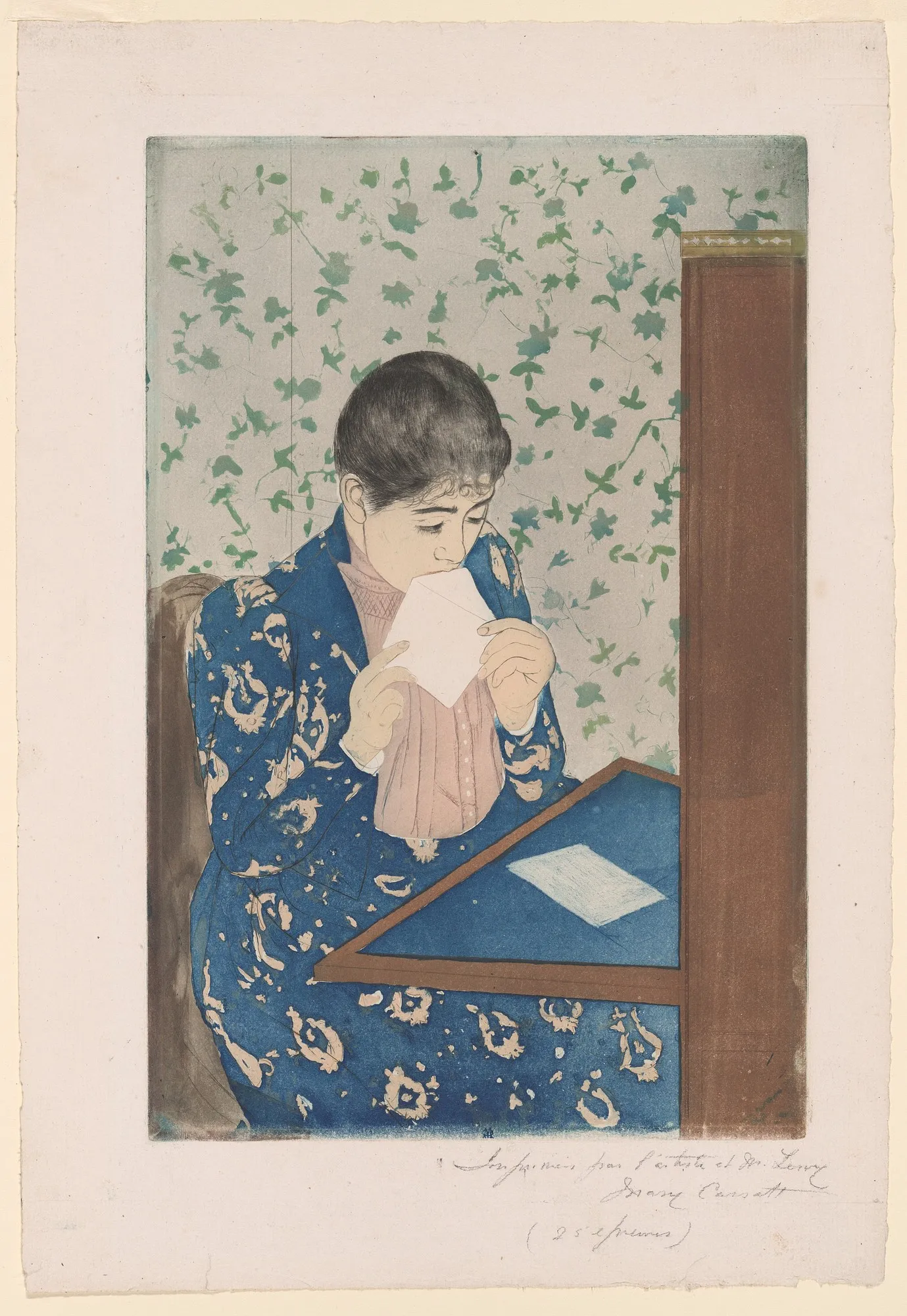
The word proof covers three different things, and separating them makes the rest of the vocabulary legible. Approval proofs are pulled so that someone can look at the sheet and decide; they are working documents, and the sequence ends when the artist signs one impression bon à tirer, good to print. Record impressions are pulled to capture a stage of the work and are kept rather than judged, the clearest case being a set of progressives that shows a colour print one layer at a time. The third group are not proofs at all. They test nothing and settle nothing. They designate who receives a sheet from outside the numbered edition, which is a question about people rather than about printing.
What is a bon à tirer?
A bon à tirer is one impression that the artist marks and signs as the standard for every sheet that follows. The phrase means good to print. If the numbered impressions are the product, this is the specification they are made against.
It belongs to the handoff between two people. An artist who prints their own edition has nothing to hand over and nobody to hand it to, because the judging and the printing sit in one pair of hands. Such an artist may still set a sheet aside for reference, but nothing requires it. Once those two roles separate, someone has to decide when the trials stop and the edition begins, and the bon à tirer is that decision made physical.
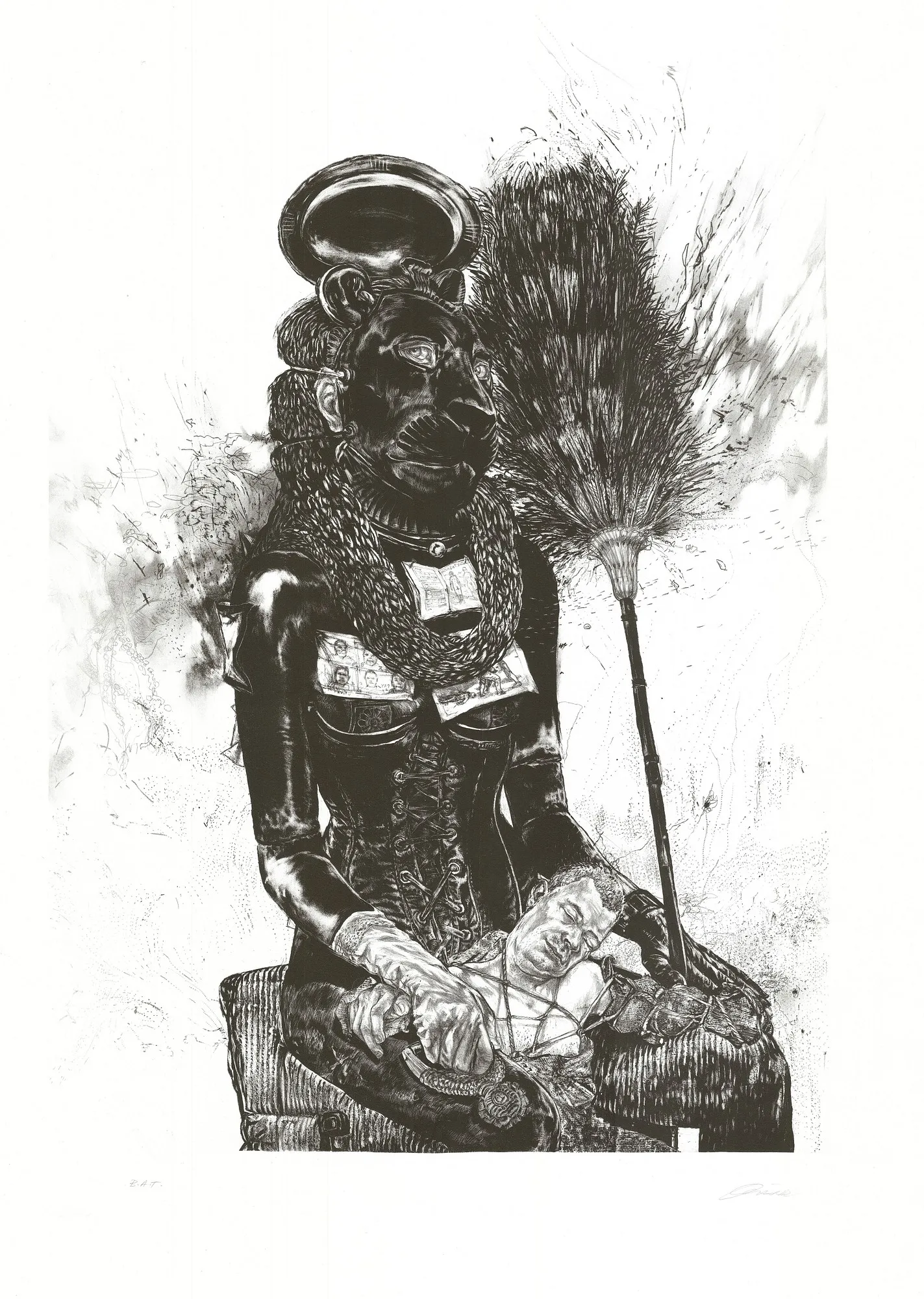
The sequence is straightforward. The artist works at the workshop, impressions are pulled and examined, and adjustments continue until one sheet is right. The artist signs that sheet BAT. The edition is then printed against it, usually over days or weeks and often with the artist absent. When it is finished the artist returns to sign the numbered sheets.
This is why the annotation carries more weight than its scarcity suggests. The College Art Association’s guidelines for printmakers describe the bon à tirer as the artist’s approved impression and the standard adhered to in printing an edition. What that looks like in practice can be seen in two workshops. At Tamarind Institute, a lithography workshop in New Mexico, every impression is checked against the bon à tirer before it may carry the workshop’s chop, and sheets that fail are destroyed. At Atelier le Grand Village, a stone lithography workshop in the Charente-Limousine, France, the bon à tirer is kept in the workshop’s archive and impressions are checked against it as the edition is printed. The sheet often carries printing notes alongside the signature, recording the paper, the ink and the inking, which makes it less a keepsake than a written instruction. It is sometimes called R.T.P., ready to print.
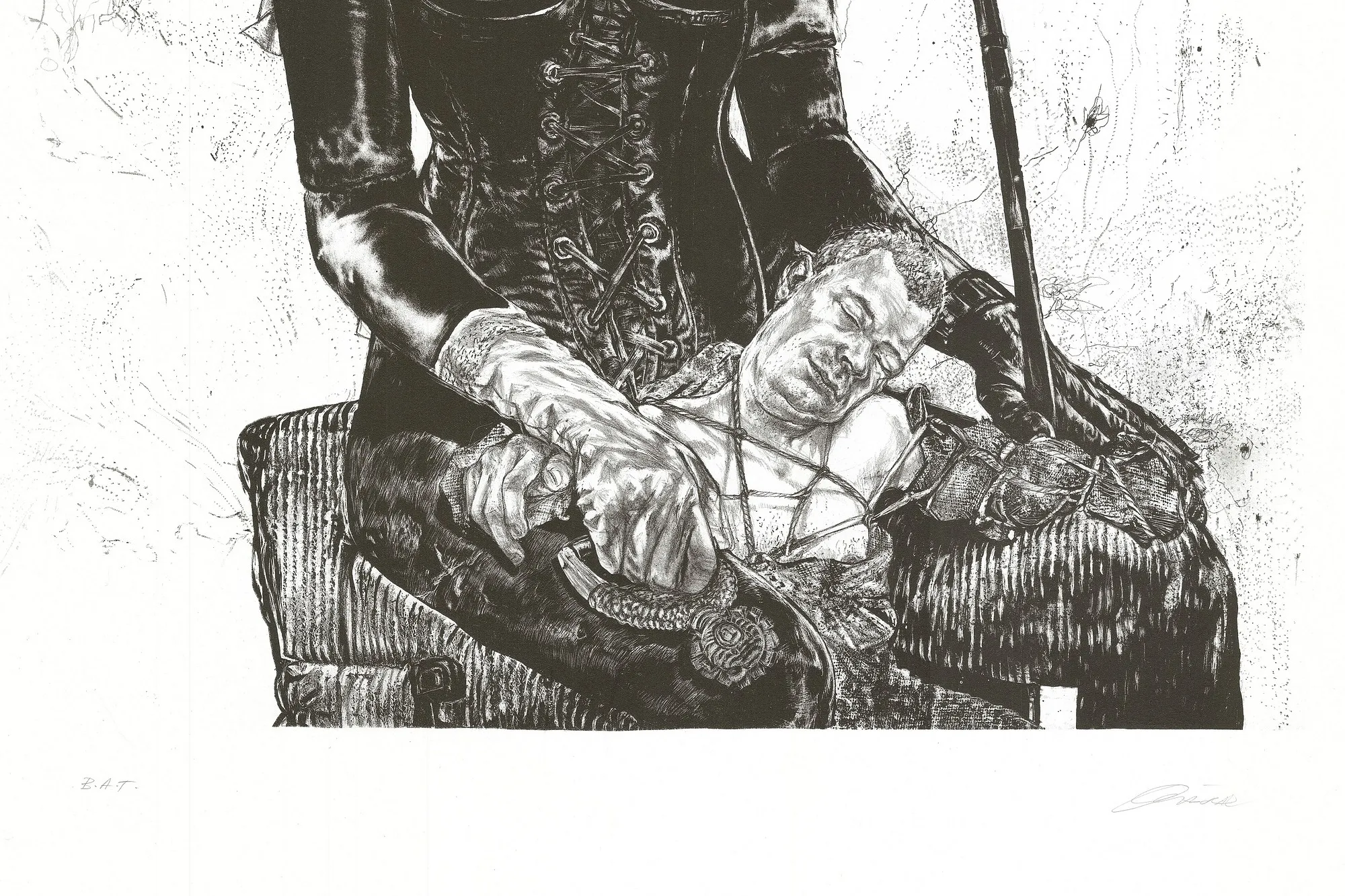
Where the sheet goes afterwards is not settled, and the variation is worth reading closely. Tamarind counts it within the edition and assigns it to the printer. The College Art Association records that it is sometimes sold instead, sometimes retained by the lead printer, sometimes returned to the artist. At Atelier le Grand Village it stays in the workshop’s archive, and the artist, having approved it, is then expected to sign the numbered edition. What the sheet does is constant. Who ends up holding it is decided by the agreement behind the edition.
Why do artist’s proofs exist?
An artist’s proof is the artist’s share of the edition. It is not a test. In most cases it cannot be told from a numbered sheet by looking at it, because it is the same image on the same paper pulled in the same run. What separates it is who owns it.
The abbreviation depends on where the sheet was made. A/P is usual in English-speaking workshops. E.A. stands for épreuve d’artiste and is the French form, also met in other countries where French print vocabulary took hold. The two mean the same thing, and a collector who encounters both will find nothing behind the difference except the workshop’s own habit.
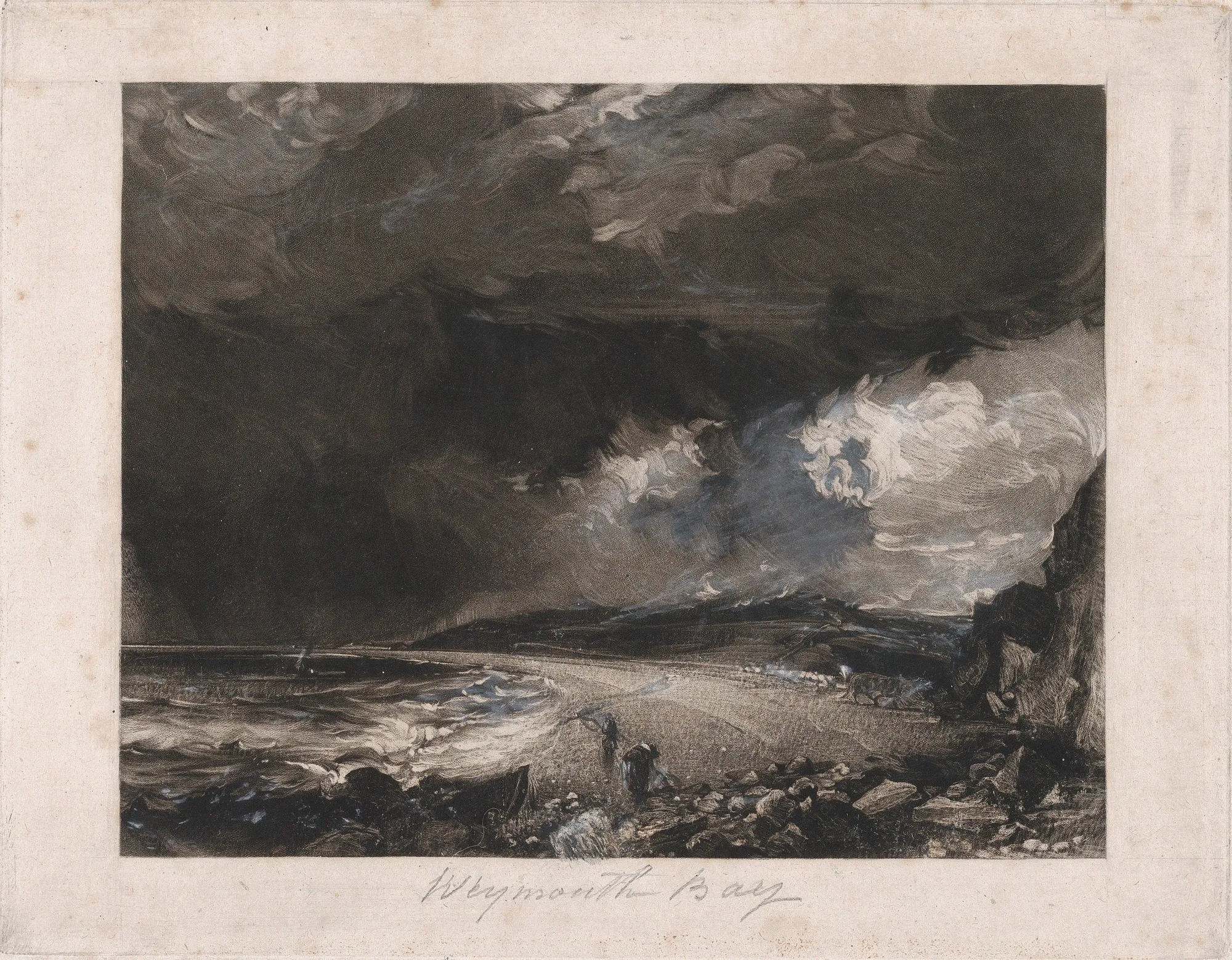
The name is a fossil. A proof was once a working document, pulled so that someone could check how the image was developing. It stopped being only that when printers and publishers noticed collectors would buy such sheets, and proof states began to be made for sale rather than for inspection. Mezzotint sharpened the appetite, since its plates wore so fast that an early impression genuinely was the better object. The premium attached itself to the word and outlived both practices. A modern artist’s proof is an impression of the finished image, made alongside the edition and indistinguishable from it. It proves nothing. It belongs to someone.
How many there should be is custom rather than rule, and the customs disagree. The figure usually quoted is no more than ten per cent of the edition. Others put it at ten to fifteen. No authority enforces either, and the number is settled between the artist and the publisher when the edition is planned.
This has a consequence worth holding on to. Proofs sit outside the numbering, so the fraction pencilled on a sheet is not a count of how many exist. An edition of fifty with proofs alongside it is more than fifty sheets, and nobody has misled anyone by saying fifty. The same logic runs the other way at some workshops, where the bon à tirer is counted inside the edition rather than outside it. What is in and what is out of the number is settled by the agreement behind the edition, not by anything that happened at the press.
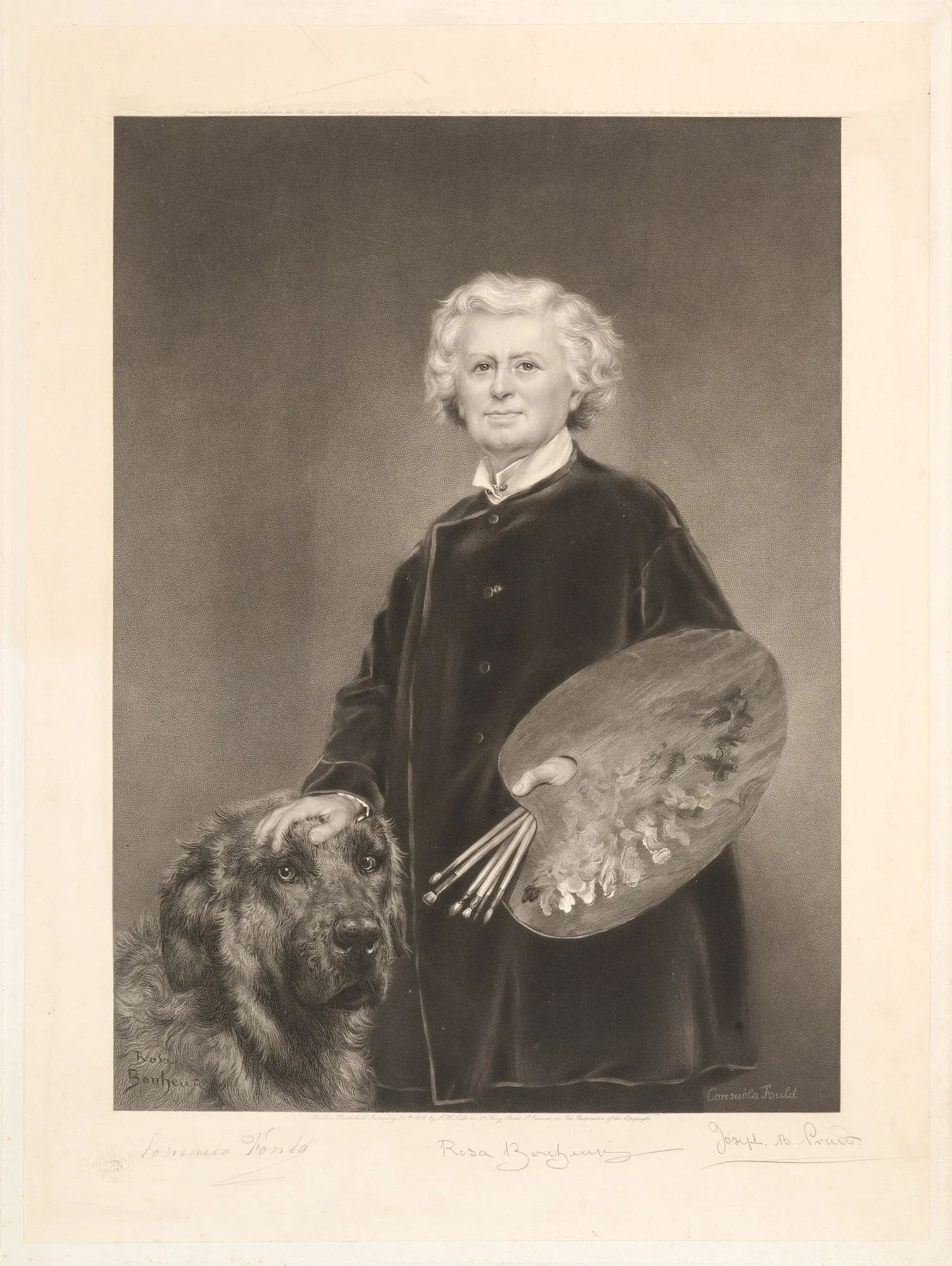
By the later nineteenth century the trade was policing its own invention. The Printsellers’ Association, founded in London in 1847, required publishers to declare an edition’s size in advance and stamped each proof with a registration code.
Why doesn’t every printer get a proof?
A printer’s proof is a sheet from outside the numbered edition that goes to a printer who worked on it, marked P.P. If the artist’s proof is the artist’s share, this is the printer’s. It is a widespread practice rather than an entitlement, and whether one is made at all depends on what the artist, the printer and the workshop agreed.
Where it does exist, it exists because of how the printing was paid for. Glossaries of edition terms describe the printer’s proof as given in thanks or in lieu of payment, which are not the same thing: one is a gift on top of a fee, the other stands in place of money. What those descriptions have in common is a printer engaged for the job, paid for the work and otherwise holding no share of the edition. The proof is that share. How many are made follows how many printers worked on the sheet.
Where the printer is employed by the workshop, the arrangement is usually different. The handling of proofs is then a matter between the workshop and the artist, and practices vary. Separate printer’s proofs may still be made for the different printers involved, but nothing obliges anyone to make them.
None of this is decided at the press. The paper, the ink and the matrix are the same whether P.P. is pencilled in a margin or not, and the same workshop may mark one edition and not the next. What decides it is the arrangement the sheet was printed under: who was engaged, how they were paid, how many of them there were, and what was agreed before the edition began.
What are trial proofs and states?
These are the proofs that record the printing rather than the arrangement. The marks in the two preceding sections tell you who receives a sheet. A trial proof tells you what the matrix was doing on the day it was pulled.
A trial proof (also called a working proof) is an impression taken while the plate, stone or block is still being worked, so that the artist can see how the image is coming along. It may show something obviously unfinished. Ink density, the bite of a line and the balance of tone become visible only on paper, so the artist pulls a sheet, reads it, and goes back to the matrix. In French these are épreuves d’essai. They belong to the approval family, pulled in order to be judged, and the sequence ends at the bon à tirer.
A state is a different thing, and belongs to neither family. The two are constantly confused, and the difference is easiest to hold if you ask who is speaking. A state, épreuve d’état in French, is a deliberate and permanent change to the matrix, so impressions taken before and after that change are impressions of different states. They are numbered in roman numerals, and a sheet catalogued I/III is the first of three recorded states. Most authorities decline to count accidental damage as a new state, since a scratch can wear away again.
Artists work in states, and often know they are doing it. An artist who reworks a plate between printings has made a new state whether or not anyone writes it down, and artists and printers may say so at the time. What artists do not usually do is number them. The numbering is a cataloguer’s system, and it comes from Adam von Bartsch, an Austrian printmaker who ran the imperial print collection in Vienna and published a catalogue of old master prints in twenty-one volumes between 1803 and 1821, still cited simply as Bartsch. He described the prints of Dürer, Rembrandt and their contemporaries, and noted where impressions differed, which is how those differences became numbered states. Every artist he catalogued was long dead. That inheritance is why a sheet’s state number is a scholarly reading of the evidence rather than a label the workshop applied, why new states are still identified, and why the numbering is sometimes revised.
Progressives belong to the record family. In a colour print each layer is printed from its own screen, stone or plate, and a set of progressives shows the image one layer at a time: the first colour alone, then the first two together, and onward. They are typically kept as a record of how the image was assembled rather than pulled for approval, though an artist or printer may well study them. The Yale University Art Gallery holds a single colour etching by Jasper Johns from 1999 alongside forty-two related sheets, among them working proofs, trial proofs, proofs of the key plate that carries the drawing beneath the colours, colour elements and progressives. One edition, five categories of retained impression, and not one of them a share of anything or given to anybody.
What do HC, EV and the other marks mean?
The remaining abbreviations are about destination, with one exception that is about the edition itself.
H.C. stands for hors commerce, outside commerce. It designates an impression made outside the commercial edition: copies for the publisher, sheets held back for exhibition or reference, replacements against damage. What it records is why the sheet was made, not a restriction that follows it. A sheet given to a collaborator, retained by a publisher, or left in an artist’s estate becomes ordinary property the moment it changes hands, and it reaches a gallery like anything else, still marked as having been made outside the edition it came from.
E.V. marks an édition variable, an edition whose impressions are deliberately not identical. The differences may come from hand colouring, from changes in inking, or from any decision to let each sheet diverge. This is the one designation that changes what a bon à tirer can be measured against. In a conventional edition a single approved sheet is the standard, and impressions that fail to match it are destroyed. An edition variable declares in advance how far the sheets may differ, so the standard describes a range rather than a single object, and divergence is not a fault.
On French sheets the letters BnF may appear, written BnF or BNF, marking an impression destined for the Bibliothèque nationale de France. French law requires publishers to deposit printed and graphic work with the national library, prints and engravings among them. What that deposit does for a print’s provenance, and whether it leaves a record a collector can consult, is a longer question than this essay can hold.
What should you actually look for?
Read the letters as a record of the agreement behind the print rather than as a verdict on it. They tell you whether an impression was the sheet the edition had to match, whose share it was, or whether it was made outside the commercial edition. What they do not give you is a grade.
Trial proofs and states are the exception, and even they are indirect. A trial proof shows an image still being decided. A state is a reading made by someone cataloguing the work afterwards, which is a different kind of claim and is better checked against the catalogue than against the pencil.
There is a second-hand way in which the letters do bear on quality. An early impression from a plate that wears is a better object than a late one, and some proofs were pulled early. Nothing in the pencil tells you that, though, and a proof pulled at the end of a run is still a proof.
Before buying a print marked with letters rather than a number, the useful questions are simple. How many proofs were made alongside the edition? Is that number recorded anywhere? Which workshop printed it? A margin annotation is a claim about the history of a sheet. Like any claim, it is worth more with a document behind it.
The Sekhmet images were provided by Atelier le Grand Village, the stone lithography workshop in the Charente-Limousine, France. The edition featured in this guide was printed and published there, and their website and Instagram carry the rest of the work the workshop has done with Diane Victor and with other artists who print there.
FAQs
Is an artist's proof worth more than a numbered impression?
Usually the two sheets are the same object. A modern artist's proof is pulled alongside the edition, on the same paper, and generally cannot be told from a numbered impression by looking at the image. A premium usually reflects scarcity and market convention rather than anything visible in the sheet.
What does BAT mean written on a print?
Bon à tirer, French for good to print. It marks the impression the artist approved as the standard for the edition, which the workshop then prints against. The term belongs to editions where the artist and the printer are different people, since it records a handoff between them.
Do proofs count towards the edition size?
Usually not. Artist's proofs sit outside the numbering, so an edition of fifty with proofs alongside it contains more than fifty sheets. Conventions differ on the bon à tirer, which some workshops count within the edition and others do not.
What is the difference between a trial proof and a state?
A trial proof is an impression pulled while the artist was still working the matrix, to see how the image was coming along. A state is a deliberate and permanent change to the matrix. Artists make states knowingly; the roman numerals that identify them are a cataloguer's system, applied afterwards and sometimes long afterwards.